
Harriet Martineau
Harriet Martineau
by Peggy Hughes
Harriet Martineau is the next figure in our Twenty Stories series marking twenty years of VisitNorwich championing the city. She was a woman of firsts, becoming England’s first female journalist and first female sociologist, writing over 1600 articles and many books, as well as a notable slavery abolitionist. And she achieved all this in spite of her deafness.
Twenty Stories. One City. The City of Stories.
From medieval rebels and mystics to pioneering reformers, artists, entrepreneurs and unsung heroes, these are the people who shaped Norwich over 1000 years- and whose legacy can still be discovered across the city today.
All our stories are told by twenty invited guest authors from across our city’s creative, tourism and cultural community.
Delve into the series with our NEW, FREE, mobile-friendly trail and discover the places linked to these incredible people- from museums and tours to cultural landmarks and green spaces. We kindly invite you to- Step Into The Story.
Stories Published So Far:
Jack Valentine | Emma de Guader | Pablo Fanque | Rumsey Wells | John Crome | Julian of Norwich | Elizabeth Fry | Amelia Opie | Margaret Fountaine | Caroline Colman | George Skipper | Samuel Bignold | Anna Sewell | Margaret (Margie) Fahey McGrath
HARRIET MARTINEAU
1802 – 1876
In the tenth annual Harriet Martineau lecture in 2025, Val McDermid opened by saying:
‘If Harriet Martineau had been a man, we would all know his name. Harry Martineau would be familiar to us as an economic pioneer, a trailblazing sociologist, an eloquent slavery abolitionist, a supporter of prison reform, an influential novelist, and a campaigning journalist – all this despite being challenged by extreme deafness. But Harry was Harriet, erased from the popular mind, consigned to oblivion like so many women who broke the conventions of their time. Ali Smith’s suggestion in the first Harriet Martineau lecture that her picture adorn the five-pound note wouldn’t have seemed at all preposterous if Harriet had been Harry; it would probably have already happened.’
Born and bred on Magdalen Street, Harriet Martineau (1802 – 1876) achieved world-renown and acclaim for her towering intellect, her radical spirit, the tenacity and rigour of her thinking, and her globetrotting independence.
And yet she has been largely hidden from history and lost to the public imagination! History has not been kind to the memory of Martineau, and yet her contribution to intellectual life, her legacy, and her own extraordinary story all deserve to be better remembered.
So!
Travel back with me to the early 19th century and we would find a teenage Harriet, quickly losing her hearing, and later to lose her father following the catastrophic failure of the family’s textile business.
But young Martineau had access to books and languages and education – all (and still today) lifeboats to hoist herself out of an alternative reality that was the fate of many other women of her generation.
She became a writer, using her own material circumstances of financial responsibility and potential precarity, her searching curiosity and independent research to write Illustrations of Political Economy, a fictional tutorial intended to help the general public understand the ideas of Adam Smith and other economic theorists.
She was soon to be outselling Charles Dickens.
Her fame spreads! The circle of admiration becomes wider and Martineau’s reputation and platform grow. She is defying gender norms by writing and thinking into a typically ‘male’ space and is lionised in circles far beyond Norwich: London welcomes her with open arms, and she undertakes a trip to the US and Canada. She is writing regularly as a journalist, and her friends and fans include Queen Victoria, the Darwins and George Eliot (who thought Martineau ‘the only English woman that possesses thoroughly the art of writing’(!)).
At the peak of her career between 1830 and 1870, Martineau consistently pursued economic fairness, women’s rights, anti-slavery causes, better public education, better health provision, secularism and advocated for a connection to nature. I fancy she would have fitted into Norwich’s progressive society today just fine: how fun it would be to run into her in the Fat Cat, or to spot her making her way along King Street for the launch of her latest book at Dragon Hall. To spy her waving a placard outside City Hall or to hear that she’s volunteering with the Norfolk Reading Project or on the board of some other cause close to her heart.
In later life, increasingly anti-Establishment views conspired to push Martineau out of received circles, and health challenges charged a move to the north of England. Tendencies towards mesmerism and atheism had made her a figure of suspicion when death finally claimed her (after many false starts) at the age of 76.
But that’s not the end of the story.
Fast forward to 2012. Norwich was awarded the title of UNESCO City of Literature in 2012, the first city in England granted membership to a global network of literary cities. Norwich: a true city of stories!
A city of literature is a relic and a promise: a celebration of the literary giants, like Martineau, on whose shoulders we stand, but equally a commitment to ensuring our literary tomorrows are as bold as our yesterdays.
To which! Galvanised by a zeal to share her extraordinary story and legacy, writer and thinker and NCW friend Stuart Hobday proposes an annual lecture, in partnership with us and as part of the Norfolk and Norwich Festival. What better way to shine a light on the archives and the present moment with the same candle? What happier format with which to recognise Martineau’s astonishing contribution to intellectual life, in her lifetime and far beyond it, than by commissioning world-renown writers to write back to her by writing forward to us?
Since 2013, supported by the Harriet Martineau Society, we have been lucky enough to hear Ali Smith’s campaign to get Martineau on your fivers; Masha Gessen on press freedoms; Lydia Cacho and Anabel Hernández on government corruption, Kit de Waal on human rights and ‘compassion without judgement’, and Charlotte Higgins on art in a time of war, to name a few.
This year we’ll welcome writer and NHS palliative care doctor Rachel Clarke. Rachel is the award-winning author of four Sunday Times bestselling books, including The Story of a Heart (winner of the 2025 Women’s Prize for Non-Fiction), Dear Life and Breathtaking.
Gallus women with world-beating ideas that challenge convention and change hearts and minds? It’s what Harriet Martineau would have wanted.
Step Into The Story.
A city you don’t just read about – you experience.
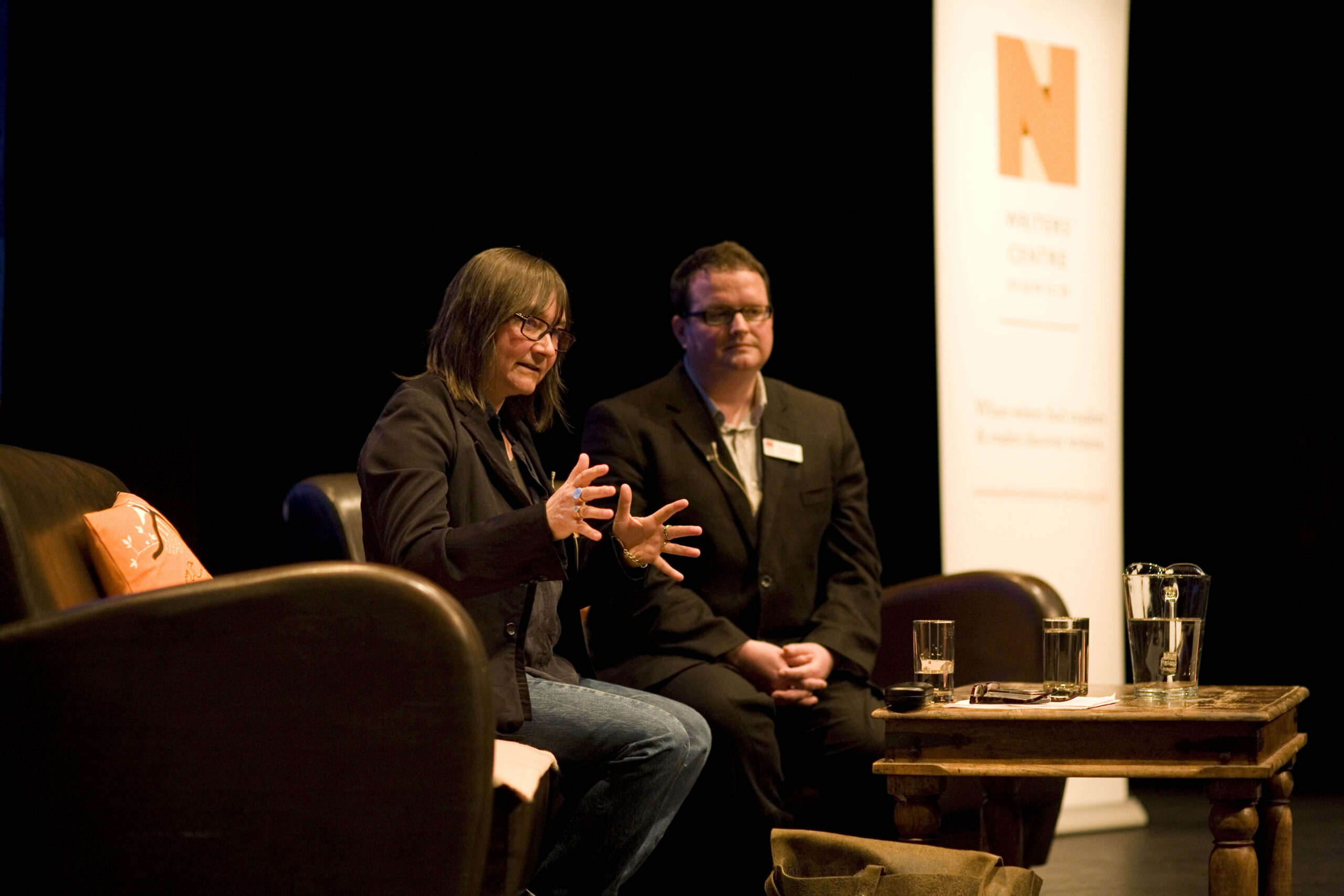
Experience the legacy of Harriet Martineau at the Norfolk & Norwich Festival’s annual lecture
As part of the Norfolk & Norwich Festival, the National Centre for Writing’s annual City of Literature Weekend takes place at the historic Dragon Hall. One of the most popualr events? The Harriet Martineau Lecture, which celebrates the legacy of this remarkable, world-changing woman by inviting globally-renowned radical speakers to respond to her life and work.
In 2026, the lecture will be given by Rachel Clarke, a writer and NHS palliative care doctor (Saturday 23 May, £12, 12pm – 1pm, the Spiegeltent). You can listen to the first Harriet Martineau lecture in 2013 by author Ali Smith here. For further listening, why not listen to Stuart Hobday and Gaby Weiner discuss their new book Reintroducing Harriet Martineau: Pioneering Sociologist and Activist as well as her incredible life and legacy.
Elsewhere, you can hear all about Harriet Martineau on a Her Story Walk with Norwich Story Walks (£10, public tour, can be booked privately) and visit Harriet Martineau’s house in Gurney Court, Magdalen Street, marked by a blue plaque (FREE). You can also spot her name on the plaque in the centre of St Gregory’s Green, dedicated to important figures in Norwich’s history.
Author bio:Peggy is currently the Chief Executive of the National Centre for Writing, and Chair of Open Book Reading in Scotland. Peggy was made an Honorary Fellow of the Royal Society of Literature in 2023, an honour bestowed on individuals who have made a significant contribution to the advancement of literature in the UK. After almost nine years with NCW, she will leave England’s first of literature to return to the world’s first, Edinburgh, in June to take up the role as Director of Engagement at the National Library of Scotland.
