
International Women’s Day in Norwich
8 March 2026
International Women’s Day in Norwich
by Katie Thompson
With Norwich’s rich history, it’s only right we shout about the many incredible and maverick women our city has seen throughout the last 1000 years. And, unsurprisingly, there are plenty to choose from. We just need to shout about them.
From writers, thinkers and artists to reformers and changemakers. They’ve saved lives, changed history and amended legislation- forever.
And with our ‘Twenty Stories. One City. City of Stories.’ series, you can get to know them even better. Whether it’s well-known names like Edith Cavell and Julian of Norwich or lesser known, but equally as important, figures like Emma de Gauder and Caroline Colman.
And if you want to find out even more about these pioneering female figures (and others!), why not join Norwich Story Walks’ Her Story Walk?
These are the Norwich women to celebrate this International Women’s Day.
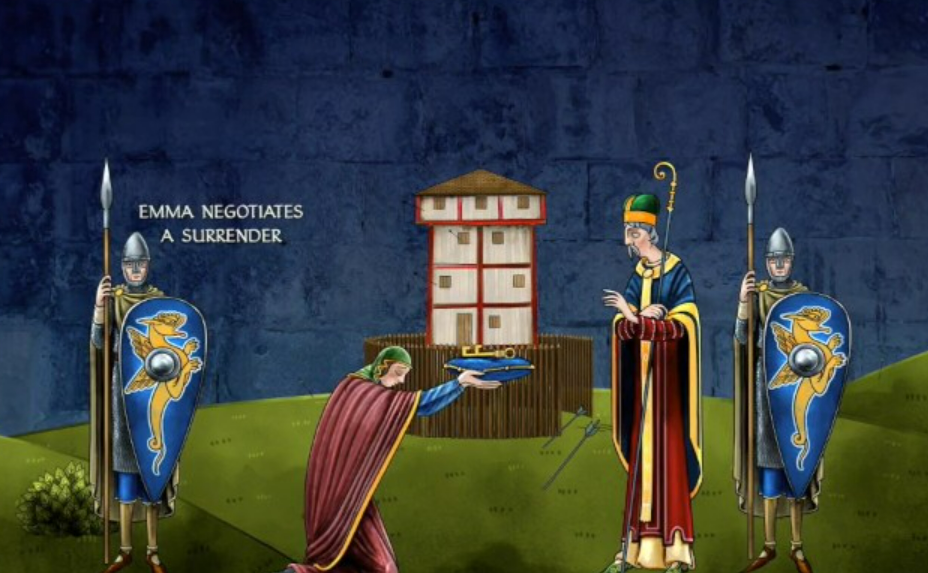
Discover Emma de Gauder’s story with Norwich Castle’s immersive projections
Emma de Gauder (1059 – 1096)
At just 16 years old, Emma de Gauder was left to defend Norwich Castle from the siege of William the Conqueror. Her husband Ralf de Gauder had fled and her brother, Robert de Breteuil, been imprisoned after plotting rebellion against the Norman king. In their absence, the young Emma held the castle for 3 months before negotiating safe passage of her household to Brittany.
This feat is remembered at Norwich Castle, through their immersive projections and ‘sequel’ to the Bayeux Tapestry, depicting the embroidered tale of Emma’s triumph.
Julian of Norwich (1343 – 1416)
‘All Shall be Well and All Shall be Well and All Manner of Thing Shall be Well.’
One of our city’s most popular literary figures, Julian of Norwich was the first woman to be published in English. Her Revelations of Divine Love, first published in 1395 and still quoted around the world, tells the story of the visions Julian saw as a young woman close to death.
Following her miraculous recovery, Julian became anchoress of St Julian’s in Norwich, where the site of her cell is still a popular pilgrimage destination.
Margaret Paston (1423 – 1484)
A member of Norfolk’s well-known Paston family, Margaret Paston was a prolific letter writer- with over 100 of the family’s letters from 1422 – 1509 still surviving (Magaret was responsible for 104 items of correspondence). They tell the remarkable story of this medieval family, giving a unique insight into their life and relationships against the backdrop of the Wars of the Roses.
Paul Dickson’s ‘The Pastons in Norwich’ tour explores this personal perspective on local and national history.
Harriet Martineau’s pioneering feminist work is remembered each year with a dedicated lecture
Amelia Opie (1769 – 1853)
Described as ‘the most respected woman fiction writer of the 1800s and 1810s’, Amelia Opie was an established writer, performing her own plays and publishing her first book all by the age of 22! She also contributed poetry to published anthologies and, over 30 years, published a number of songs.
Yet in 1825, Amelia gave up her privileged position, visiting workhouses, hospitals, prisons and the poor as a Quaker in the Society of Friends. You can see her statue on the eponymous Opie Street in the Norwich Lanes.
Elizabeth Fry (1780 – 1845)
Elizabeth Fry is probably the best-known female Quaker, famous for her efforts to reform the British prison system in the early 1800s. Thanks to an educated upbringing (unusual for the time), Elizabeth questioned the frivolities of society and began to focus on doing good in society.
After hearing of the conditions of Newgate Prison, she enlisted a committee to make clothes for babies there, helping the sick and creating better conditions, establishing a school and even promoting employment in prisons. This led to long-lasting reform in the way prisons are run.
Harriet Martineau (1802 – 1876)
Harriet Martineau is known for her firsts. She was England’s first female journalist and first female sociologist! As a notable political and feminist writer, Harriet’s worldwide travels influenced her writings. As a result, she advocated women should be free to choose their own way, to express themselves intellectually and support themselves. She also advocated divorce and birth control and campaigned against slavery.
Harriet Martineau was fearless in expressing her beliefs and lived her life as an independent woman when many didn’t. Similar views are still disputed today.
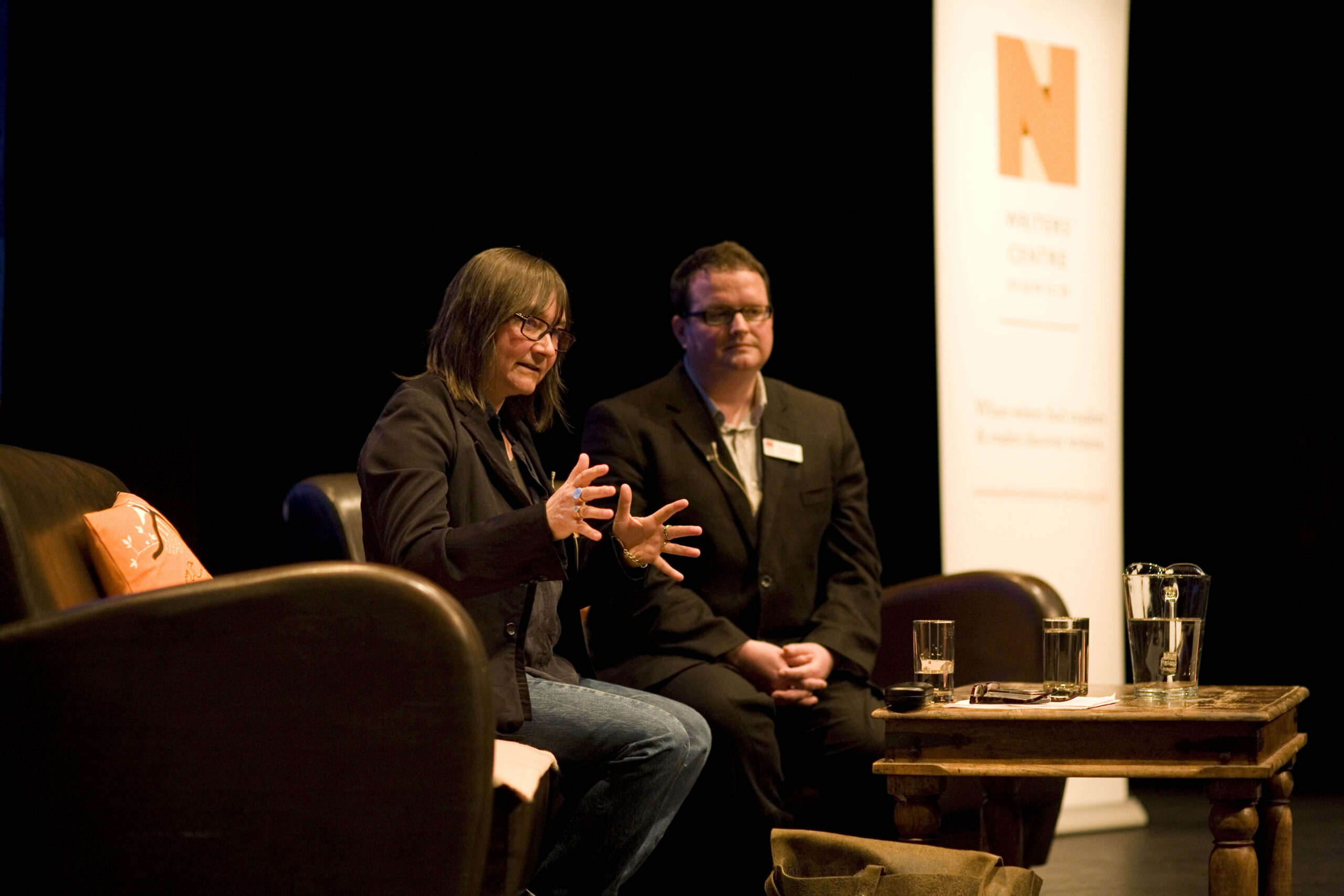
At the National Centre for Writing, she gives her name to an annual lecture during the Norfolk & Norwich Festival which invites global, radical speakers to explore her life and work.
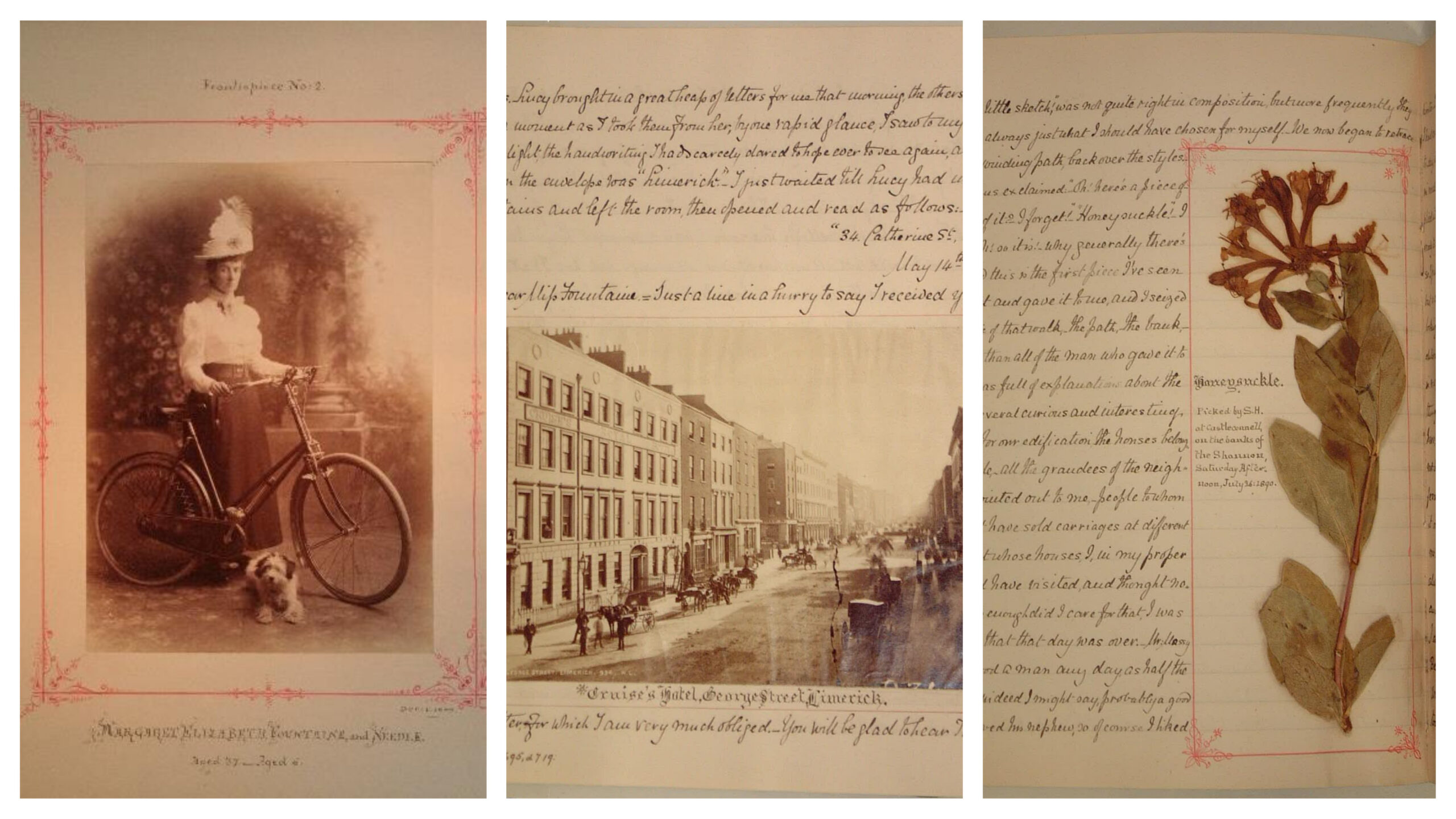
Margaret Fountaine’s diary offers insight into the life of a Victorian naturalist- not to mention her 22,000 strong butterfly collection!
Anna Sewell (1820 – 1878)
As one of the bestselling books of all time, Anna Sewell’s Black Beauty hoped to educate working-class men and boys on the welfare of horses they cared for, opting to narrate the story from the horse’s perspective- one of the first English novels to do so. Taking seven years to complete from her sickbed in Norwich, the book was first published by Jarrolds in 1878- just 5 months before she passed away.
This classic tale helped change attitudes towards horses’ welfare and has gone on to sell 50 million copies worldwide. You can visit Anna Sewell House, the author’s Great Yarmouth birthplace, whose owners Redwings Horse Sanctuary continue her legacy.
Caroline Colman (1831 – 1895)
Caroline Colman was a welfare champion, who significantly improved the social conditions of Colman’s Mustard at Carrow Works.
She set up a school for employees’ children, which grew from 22 to 324 children in just 13 years, and introduced a pioneering work kitchen to provide hot meals at affordable prices. In response to Caroline’s social concerns, a residential home was opened for single girls employed by the company, a dispensary founded and industrial nurse employed, and she helped provide yearly care packages for deprived families.
Whilst Caroline’s impact is little known, her impact is long-lasting.
Margaret Fountaine (1862 – 1940)
Margaret Fountaine was a leading lepidopterist (studier of moths and butterflies), diarist and adventurer. Her interest in these beautiful creatures culminated in a collection of 22,000 butterflies from around the world! (You can admire them in Norwich Castle’s Natural History gallery.)
At age 16, she started her 62-year diary, left to Norwich Castle Museum & Gallery and opened in 1978, the centenary of her birth. They offer an important insight into the life of a Victorian female naturalist who collected in and wrote about 60 countries on six continents over 50 years.
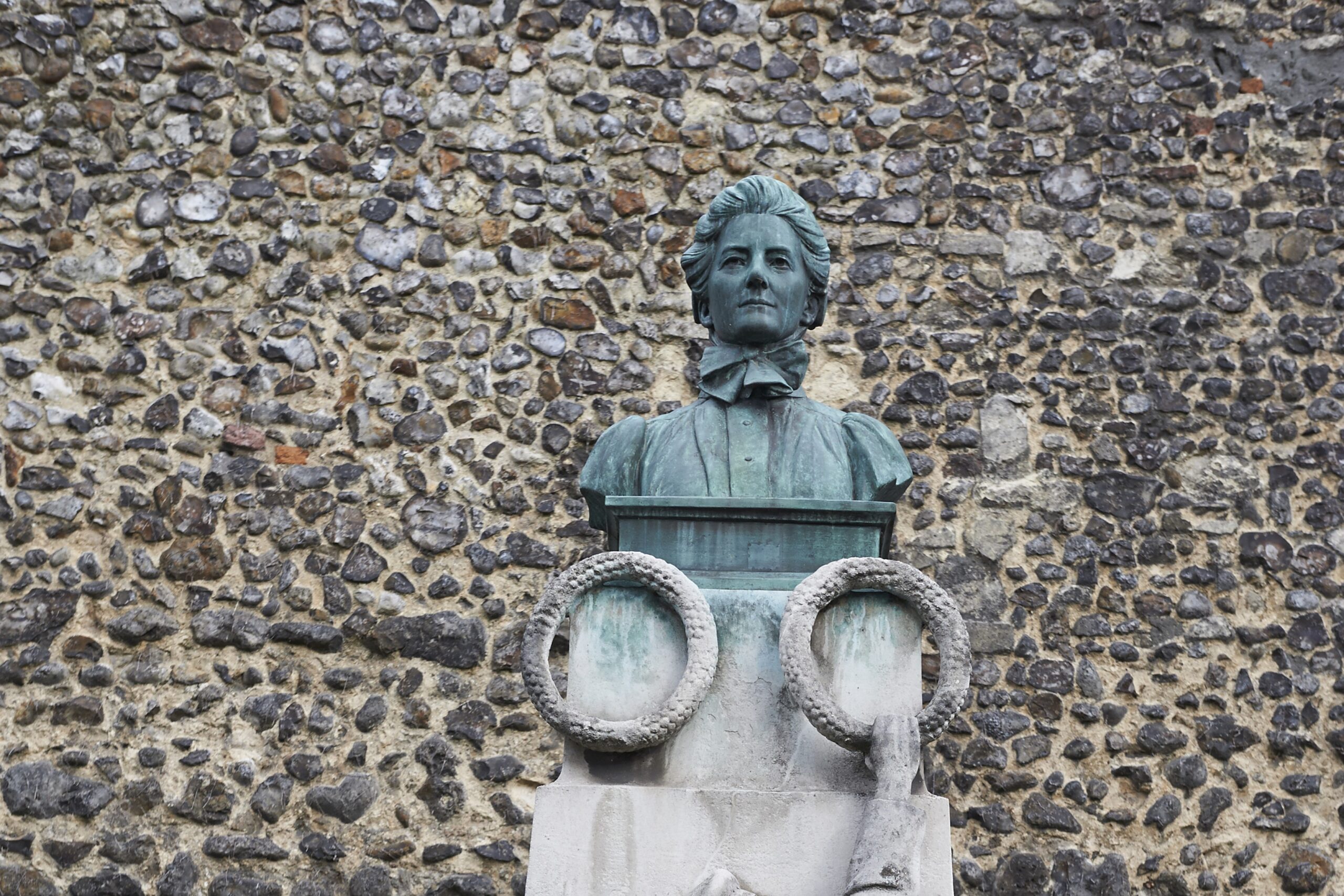
Edith Cavell’s body was laid to rest at Norwich Cathedral
Edith Cavell (1865 – 1915)
One of Norwich’s most famous names, Edith Cavell is known for her bravery during WWI. As a nurse, she’d already earned the Maidstone Medal, helped revolutionise Belgium’s medical system and become a valued member of the Red Cross, before nursing soldiers of both sides back to health in Europe in 1914.
In the early war, Edith protected the location of an underground passage that allowed Allied soldiers escape via Holland. When interrogated in 1915, Edith was manipulated into confessing. The penalty was death. Despite this, her final statement includes the words “I must have no hatred or bitterness towards anyone.”
Edith Cavell is buried in Life’s Green at Norwich Cathedral, next to the WWI memorial St Saviour’s Chapel.
Margie Fahey McGrath (1918 – )
As a social worker for the American Red Cross, Margie Fahey McGrath was stationed at Wymondham for 2 years from 1943. She was a prolific letter writer, sending 200 letters from Norfolk to family and friends in Syracuse, NY, detailing her time in the county. Margie loved the age and beauty of Norwich Cathedral, worked with patients, played Bridge with the airmen and even hitched rides in army vehicles to Norwich.
Her letters are a compelling personal view of how people lived on both sides of the Atlantic during WWII. You can uncover the stories of those like Margie in the UK’s only American Library in The Forum.
