
A Guide to Norwich’s City Walls
A Guide to Norwich’s City Walls
by Katie Thompson
Once one of England’s most prosperous medieval cities (second only to London, in fact), it’s no surprise that Norwich boasted impressive city walls. Standing since medieval times, you can still see remains of these ancient urban defences today!
And they’ve played host to almost 900 years of history. From Robert Kett’s rebellion in 1549 to the arrival of our Strangers’ and the 1942 Baedeker Raids. If walls could talk, imagine the stories they’d tell!
So, if you’re a history lover or just curious about Norwich’s past, here’s our guide to Norwich’s city walls. (When you visit, remember to take a look for yourself!)
Image: Black Tower
About Norwich’s City Walls
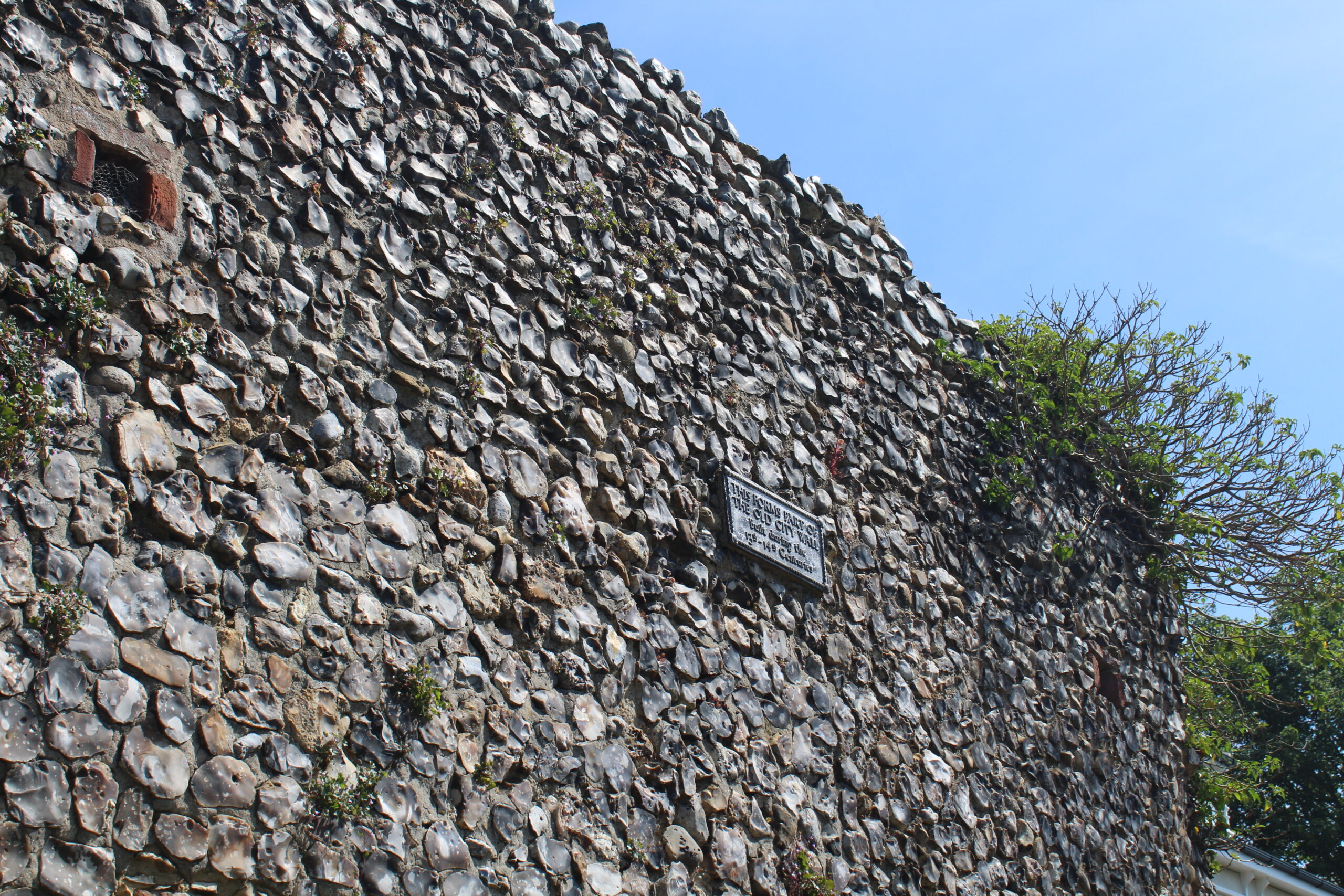
Norwich’s city walls were once the longest urban defences in the country!
If you want to imagine where Norwich’s city walls used to stand, picture the general route of the inner ring road.
The first stones were laid in 1294- it took around 150 years for them to be completed and when they were, in the mid-14th century, Norwich’s city walls were the longest circuit in Britain. Even more so than London!
Crafted from strong Norfolk flint, combined with brick and stone, they cast an imposing introduction to the City of Stories. The walls stood at 7 feet high and were ringed by a deep outer ditch- further defences against any potential enemy. Not to mention reinforced by 40 towers, 12 gates and two boom towers controlling river access, measuring up anyone who wanted to enter the city
And the walls often did face the enemy, with conflict a common cause of demolition.
Being the country’s longest urban defences had its downsides. In 1549, Wymondham landowner Robert Kett led a rebellion against the wealthy in Norwich in protest of land closures (find out more on Paul Dickson’s fascinating Shardlake’s Norwich tour (£12)). From his vantage point from his camp on Mousehold Heath, Kett observed the difficulty of defending so many miles of walls. So, he concentrated his efforts in the northwest and, despite the rebels’ defeat at Dussindale, the city walls, notably its gates at Magdalen and Pockthorpe, suffered under fire.
More recently, lack of use, increase in traffic and the city’s expansion saw numerous gates demolished in the late 1700s and early 1800s. It seems a sad end for such a strong symbol of Norwich’s impressive past.
Did you know? The 12 gates are still names we recognise in Norwich today. They are:
- Bishopgate, where Bishop Bridge is today
- Conisford Gate, at the junction of Carrow Road and King Street
- Ber Street Gate, where Ber Street joins with Bracondale
- Brazen Doors, at the junction of All Saints’ Green and Queens Road
- St Stephen’s Gate, where St Stephen’s roundabout stands today
- St Giles’ Gate, the northern side of Grapes Hill roundabout
- St Benedict’s Gate, at the junction of St Benedicts Street and Dereham Road on the inner ring road
- Heigham Gate, where Barn Road meets Westwick Street
- St Martin’s Gate, at the junction of Oak Street and St-Martin-at-Oak-Wall Lane
- St Augustine’s Gate, where St Augustine’s Street meets Aylsham Road
- Pockthorpe or Barre Gate, where Barrack Street meets Silver Road
Where Can I See the City Walls?
Chapelfield Road
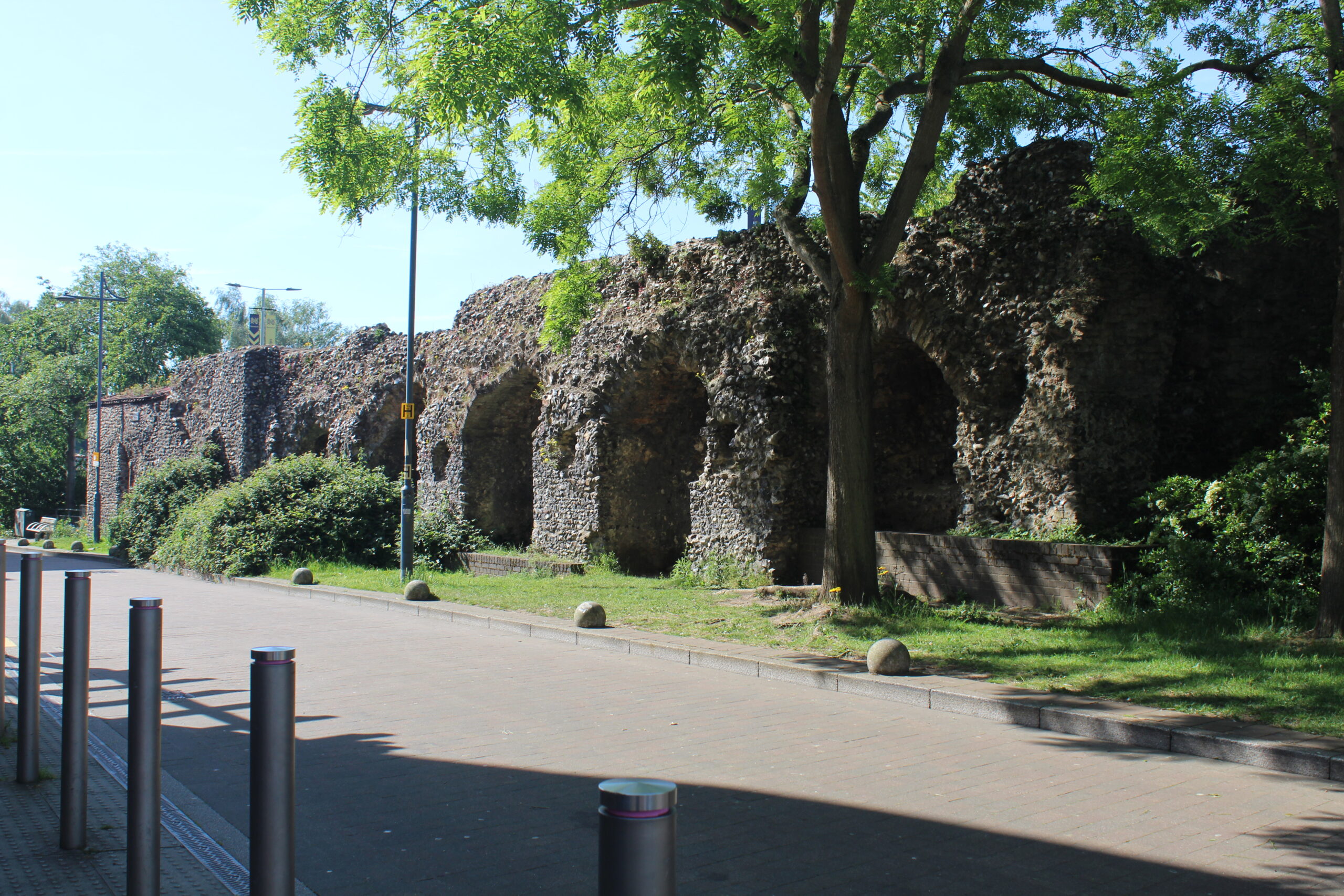
The walls on Chapelfield Road stand right at the heart of everyday life
Start at Chapelfield Road, just a short walk from the bustle of our city centre and less than 10 minutes from Norwich Bus Station. Along Coburg Street, behind Chantry Place shopping centre, is a large section of city wall. Both Brazen Gates and St Stephen’s Gate formed part of this defence. The height and thickness of these defences is easy to respect here, accentuated by strong arches. A sign near the exit of Chantry Place will give you more detail on the fate of St Stephen’s Gate.
While You’re Here: For a special souvenir, pop into Lisa Angel in Chantry Place. This local gift shop boasts a fun selection of illustrated Norwich-themed prints, totes and even baubles! If you’re feeling peckish, stop by The Assembly House for one of their ever-popular cream teas or three-cheese toasties, or head to Nothing Fancy in Chapelfield Gardens for a Mr Whippy.
Grapes Hill & Barn Road
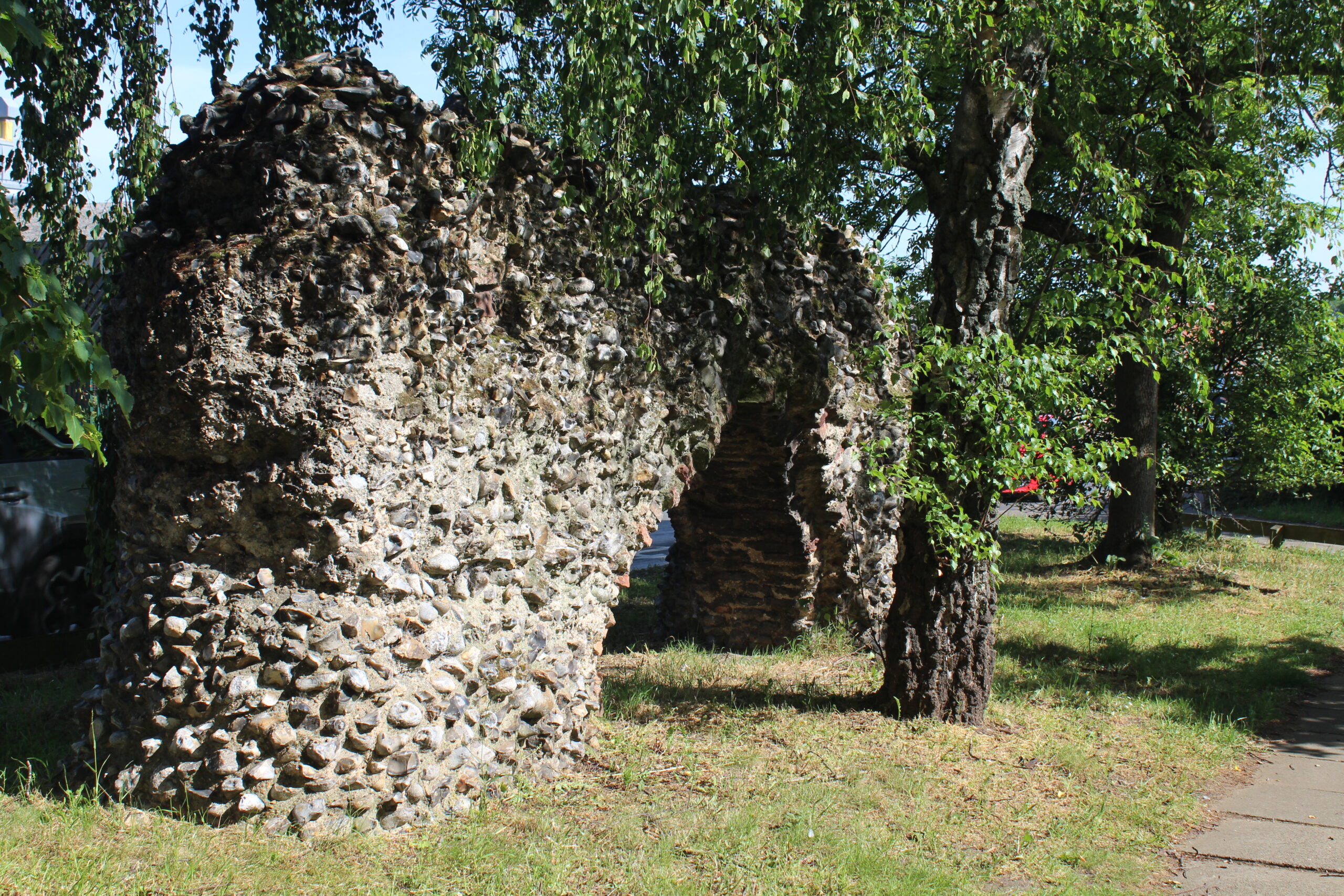
The walls on Barn Road and Grapes Hill once flanked St Benedict’s Gate
Heading northwest to Grapes Hill roundabout, start at the site of St Giles’ Gate (see above) and walk down Wellington Lane to that of St Benedict’s Gate. Here, the city walls begin at the bottom third of the hill before being intersected by a crossroads, after which a more dilapidated section continues for a few metres on Barn Road. Close by (2-minute walk), stands the remains of St Benedict’s Church- this religious building gave both the street and gate their names. Its round Norman tower is all that survives following bombing from German planes in January 1942.
While You’re Here: Enjoy a round of competitive bowling at Bowling House in their retro-inspired lanes, before tucking into a feast of their delicious sharing plates. And you can make an evening of it in their karaoke booths! Or treat yourself to unforgettable fine dining at Benedicts before an evening of entertainment at Norwich Arts Centre.
St Augustine’s & Magdalen Street
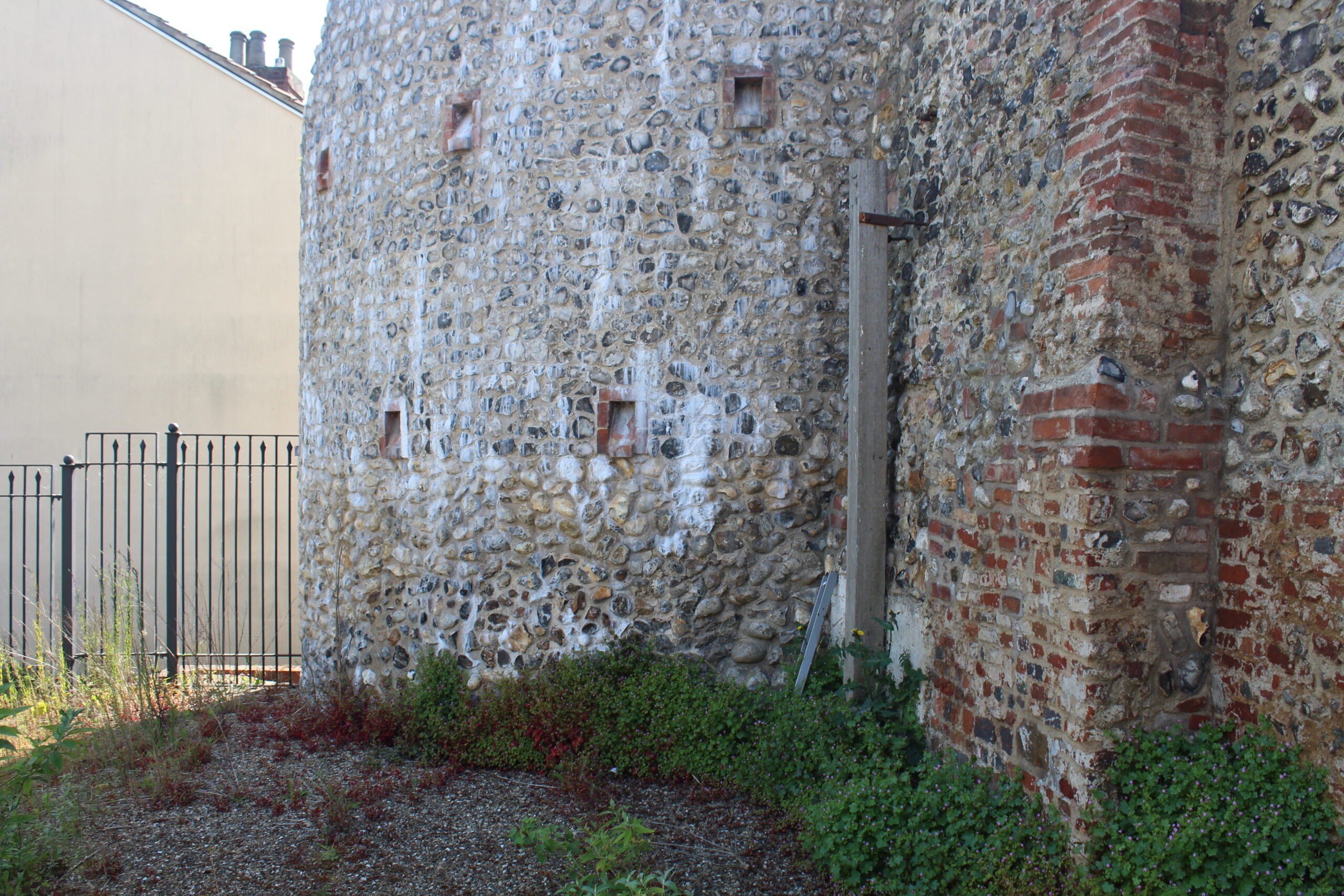
On Magpie Road, take a look at the walls’ layers and detail
Carrying on along Barn Road- past Westwick Street where Heigham Gate once stood, you’ll join our riverside walk (more on that later). Make your way north on Oak Street until you reach St-Martins at Oak Wall Lane. Like the name suggests, here you’ll encounter a long- but no longer imposing- section of the city walls. At its west end stood St Martin’s Gate; at its east, St Augustine’s Gate. From here, walk east along Magpie Road until you’re welcomed into Magdalen Street by ruins of the former Magdalen Gate. Its pedestrianised location and open arches mean you really can see an incredible piece of history up close.
While You’re Here: Magdalen Street is known for its strong independent and alternative community spirit. See what’s on at EPIC Studios or stop for a coffee in their backstage-inspired cafe and bar The Green Room. Then explore the containers of St Saviour’s Yard and meet local makers. Further north is popular neighbourhood pub The Whalebone– we suggest a crisp pint on their patio.
Barrack Street
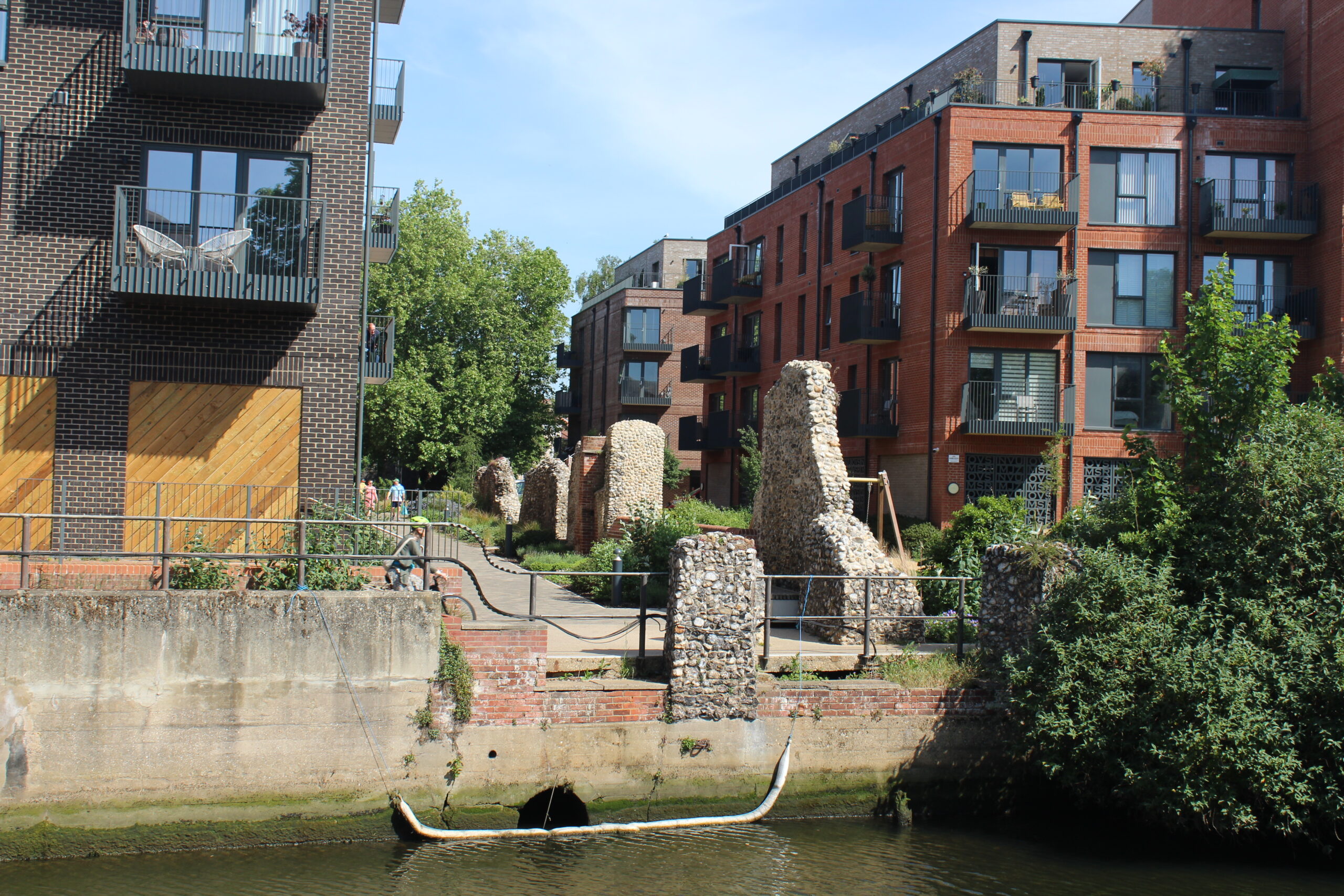
You can see part of the walls that once connected with those on Barrack Street from our riverside walk
Keeping making your way west on Bull Close Road until you discover the remains of Barre Gate on Silver Road. This solid section of wall, reinforced by a mostly complete gate, cuts an imposing figure in a now leafy residential area.
While You’re Here: Just a short 3-minute walk away is Norwich Puppet Theatre. Housed in one of the city’s many medieval churches, it’s one of only three building-based puppet theatres in the country! From here, head south towards our riverside walk, following the meandering River Wensum to Riverside. Facing St James Mill, walk on the left side to see another section of wall, then cross over at Jarrolds’ bridge to be on the right side for Cow Tower. This winding path will take you past Cow Tower– a local landmark and former artillery tower built to defend this corner of the city in the late 1300s. If you time it right, the gate might be open! Don’t be afraid to look inside at the narrow arrow slits and intricate brickwork.
Our other favourite waterside stops include The Lions’ Den River and The Red Lion Bishopgate (whose former gate once controlled foot traffic crossing the Bishop Bridge into Norwich). Or you can get onto the water itself with Pub & Paddle, gliding along from Elm Hill Quay.
Carrow Hill
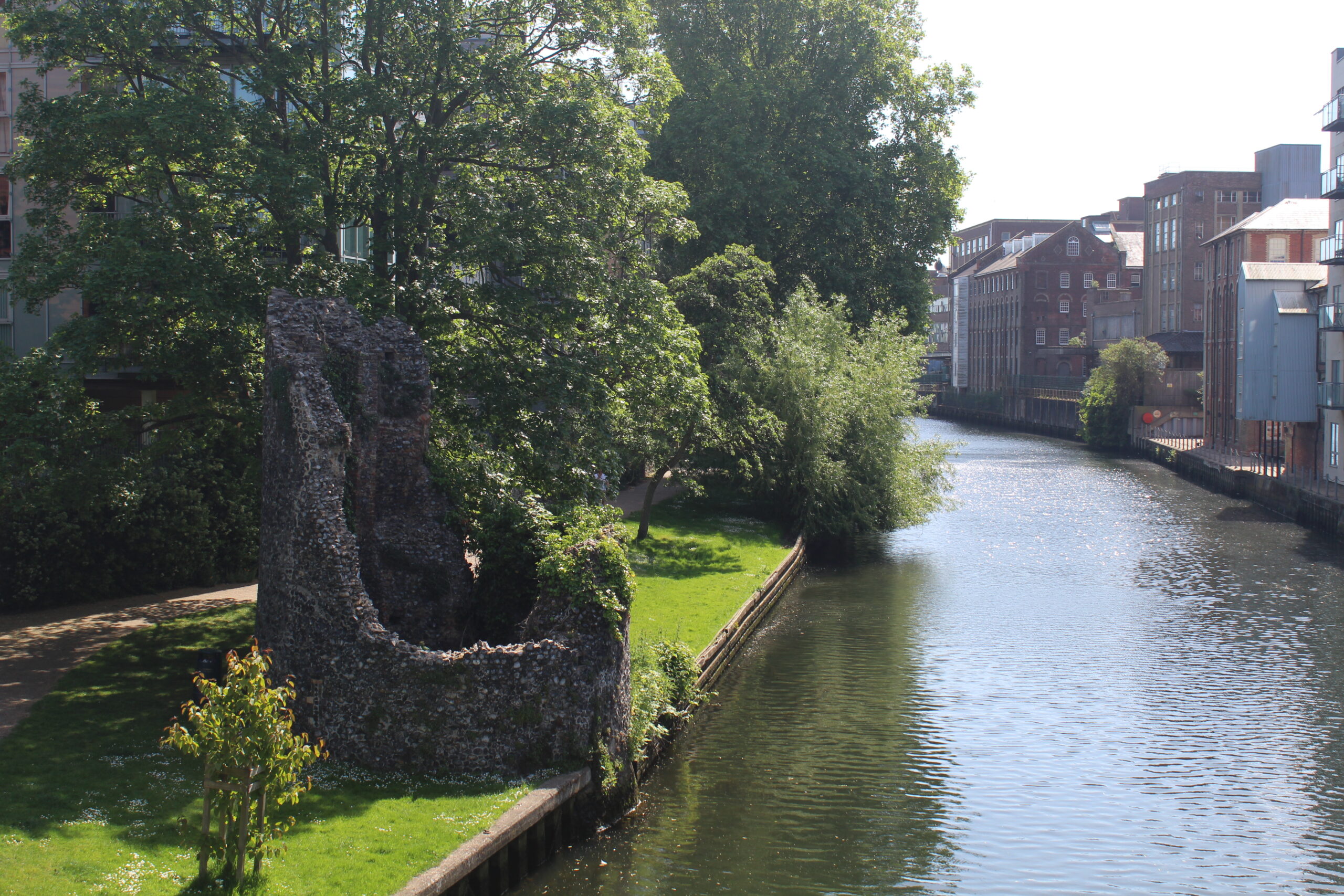
Flanking the River Wensum, Carrow Hill’s two boom towers controlled river traffic
The next section of existing wall doesn’t appear until Carrow Hill. But first you’ll notice the ruins of two boom towers (the east tower is known as Devil’s Tower) flanking the river at Carrow Road (and, no, they’re not used to keep the away fans out!). In fact, they were built to control river traffic and traders accessing the city on the water, even raising Spanish chains stretched between them to prevent ships from entering. Once inside, you would have passed Conisford Gate.
From the west tower (which you can see up close from the riverside path) , a stretch of city wall reaches westwards to Carrow Hill. Follow the pathway and stop to admire the remains of another round tower (named Wilderness Tower) and the more threatening Black Tower. (The pathway is currently undergoing repair works- if you follow King Street until you reach the bottom of Carrow Hill, follow this road round right and you’ll soon see Black Tower looming above.) It stands proudly looking out across the south of the city- you can even see the doorway where the top of the walls and defence tower once met. While ivy has reclaimed the arrow slits, you can still admire how the layers of flint, brick and stone reinforced the city walls’ strength. Walking along the pathway and separated from traffic, you get a sense of their importance as a symbol of power to outsiders.
While You’re Here: It would be wrong to visit Carrow Road without seeing Norwich City Football Club’s stadium, right? For any sports enthusiast, we recommend a tour to experience Norwich like a true Canary. If you want to experience Norwich as medieval traders once did, hire a motorboat from Bishy Barney Boats at Thorpe Green and make your way towards the city and past the boom towers looming over the water.
Ber Street
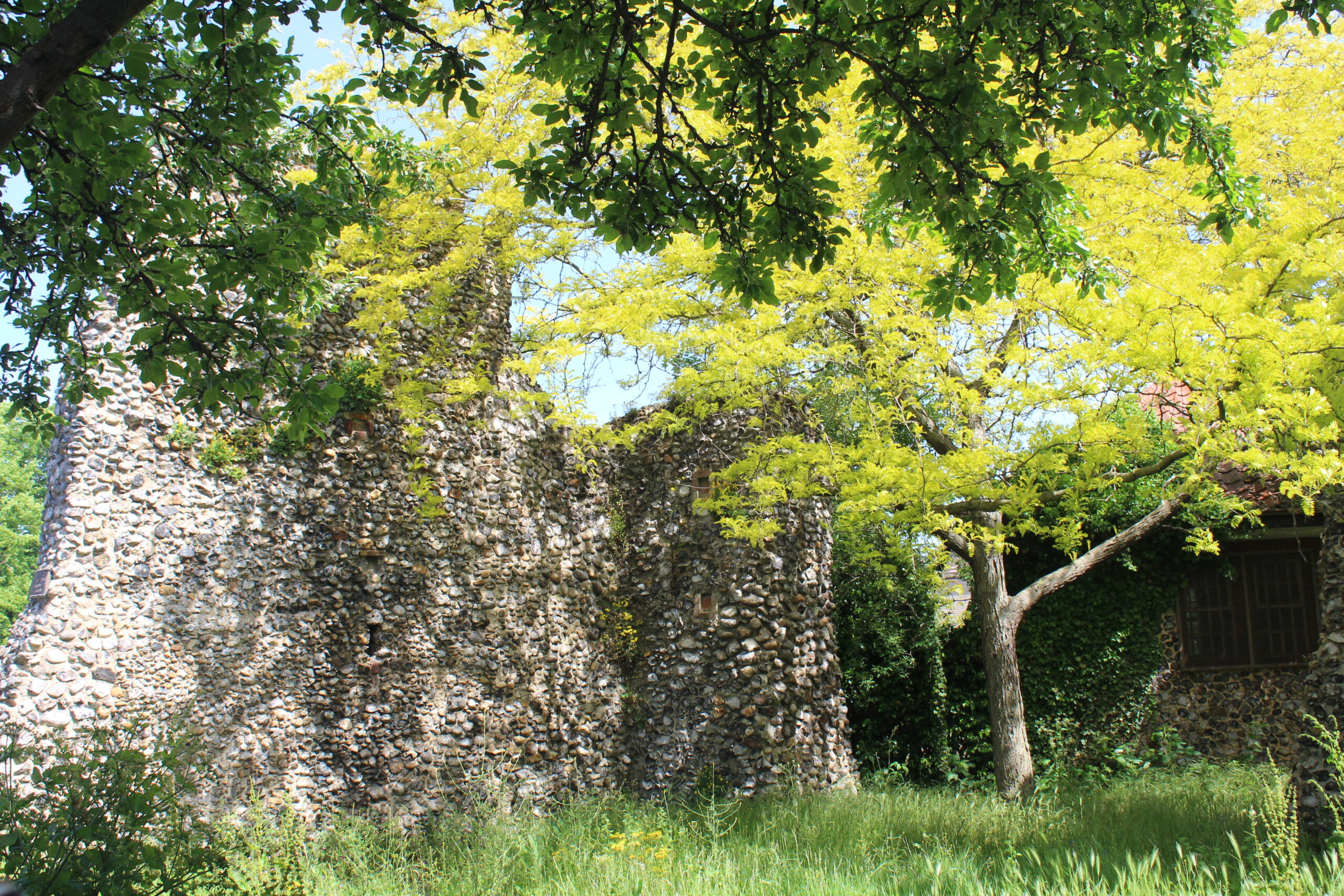
At Ber Street, nature and heritage are intertwined
You’ll find the final existing section of our city walls where Ber Street meets Bracondale, just 4 minutes from the previous location. Once the site of Ber Street Gate, today, nature has reclaimed much of the walls’ surroundings. In the warmer months however, you can settle down on the nearby bench and admire such a feat of engineering in the dappled shade of luscious horse chestnuts. Look up and you’ll still see the silhouette of the gate’s crenellations outlined against the sun. (Although currently closed, you can still admire this strong fortification.)
While You’re Here: Before heading back to the city centre, detour slightly east to The Julian Shrine. This site of pilgrimage was once home to the anchoress cell of medieval mystic Julian of Norwich and still attracts visitors from across the world. And for more historical architecture, cut through to King Street, where you’ll be greeted by the beautiful beams of former merchants’ hall Dragon Hall, home to the National Centre for Writing. In summertime, step inside to marvel at the Great Hall or take it in from the walled garden.
If you love combining history and exploring, why not make a day of it? Or you can take your time over a few days, visits and hours discovering the stories of Norwich’s past through its city walls. If you want to follow this blog completely, we recommend at least 3 hours to take it all in without stops, or add a little longer to make the most of the city’s lovely independent shops, cafes and peaceful spots.
We also suggest following heritage charity The Norwich Society’s dedicated self-guided City Wall Walks. Each one takes 60 – 90 minutes, beginning from The Forum and soaking in our plentiful medieval sights along the way.
-
Existing Norwich City Walls
