
What to See in the Galleries at Norwich Castle
What to See in the Galleries at Norwich Castle
by Katie Thompson
As one of Norwich’s most important landmarks, Norwich Castle is brimming with history and fascinating stories. From life as a medieval royal palace to a Victorian prison to the museum and art gallery we know and love today.
Chances are you’ve visited the Keep, restored to Norman splendour after a multi-million-pound redevelopment. And many of us will know the captivating displays on Romans, Egyptians and natural history. But what about the Castle’s galleries?
Spanning fine art and decorative arts, historic pieces and contemporary works- not to mention an exciting programme of eye-catching exhibitions, there’s more to Norwich Castle than first meets the eye. And that’s without delving into the depths of the permanent collections that aren’t on display (including Rene Magritte’s La Condition Humaine, 1935)!
So, what better way to while away an autumnal afternoon? With the help of Senior Curator Francesca Vanke, here are our top picks of what to see in the galleries of Norwich Castle.
Image: Nick Warner
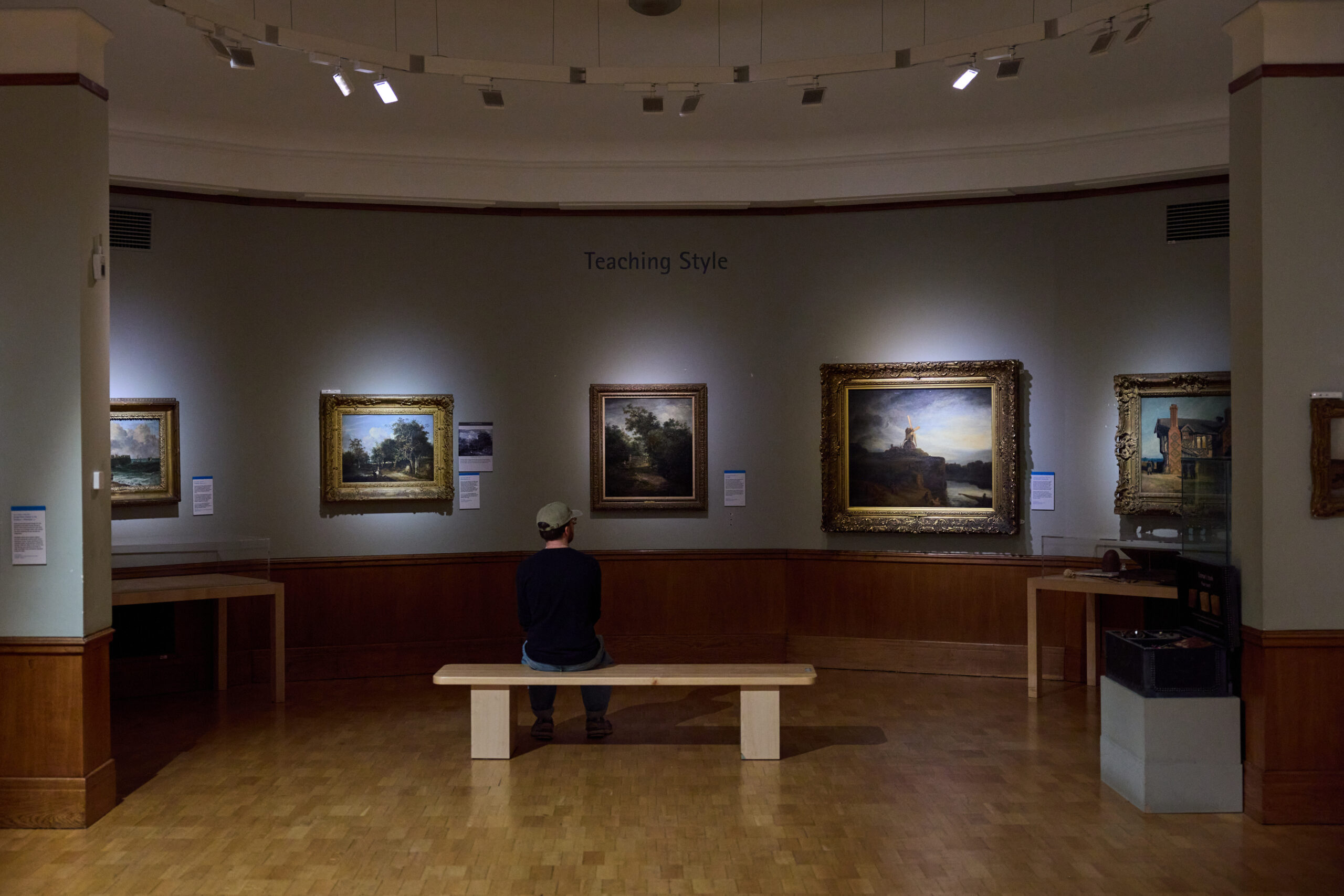
Did you know that Norwich Castle is home to the largest collection of the Norwich School of Artists in the world? Credit: Nick Warner
When the wind begins to whip up leaves in a whirlwind of gold, let yourself be enticed into the glowing galleries of Norwich Castle. Home to the largest collection of the Norwich School of Artists in the world, this is the Castle behind the Keep. Make your way to the Rotunda, with galleries of striking creations, impressive landscapes and brilliant attention to detail.
From the kitsch and the quirky (we’re talking about the largest collection of British ceramic teapots globally, including a rare glass dragon that miraculously survived a fall down a well!) to the elegant and intriguing (it would be wrong not to try and decipher The Paston Treasure, after all), there really is so much to see here.
And this year marks the 70th anniversary of Norfolk Contemporary Art Society, who have supported the Castle to collect and display contemporary visual art and artists from across the region, allowing us as visitors to compare the wealth of artistic talent blossoming in Norfolk from then to now.
So, take your time, forget what’s going on outside and embrace the anticipation of exploring this warren of galleries.
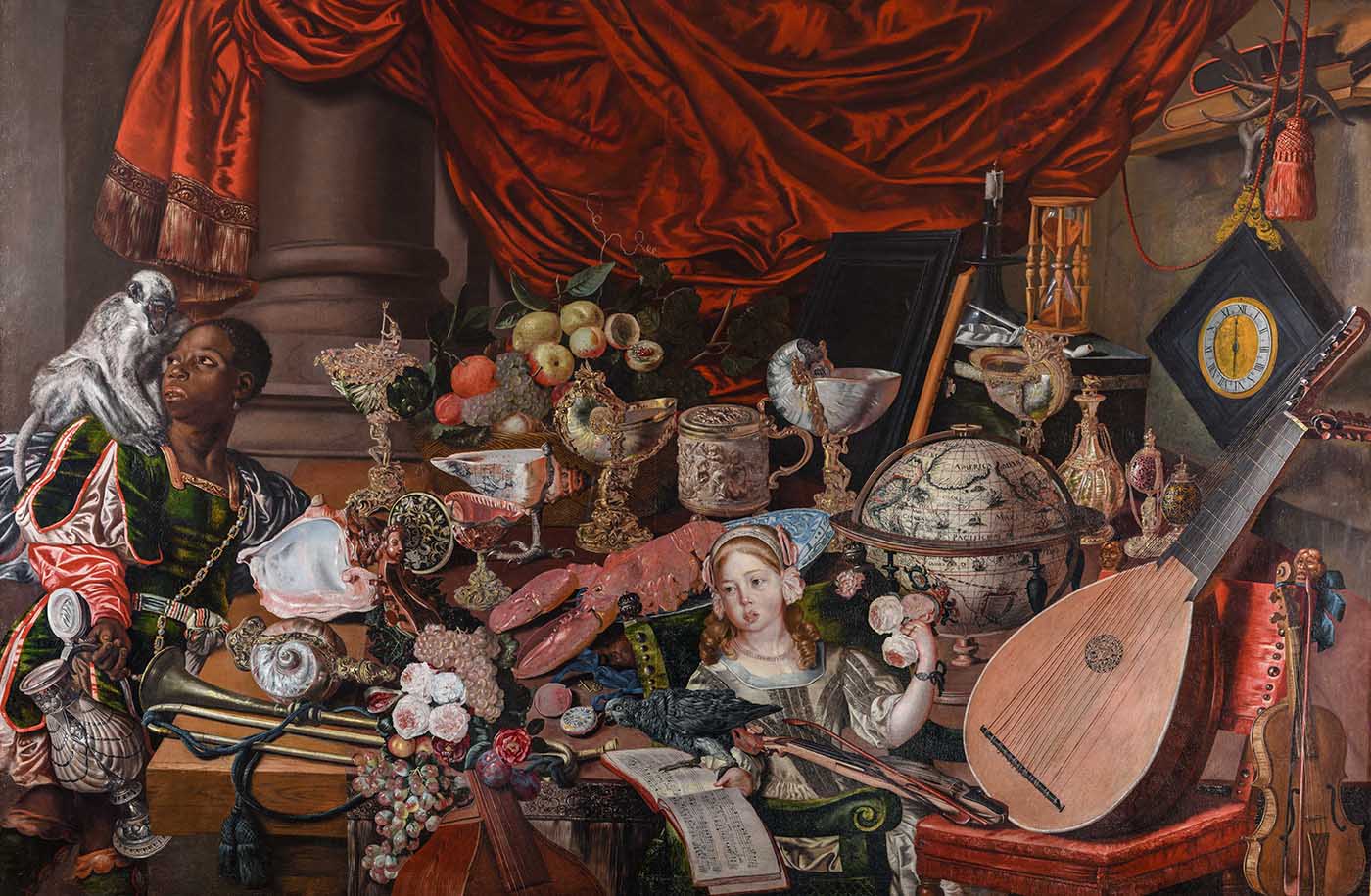
The Paston Treasure (The Yarmouth Collection) by unknown Dutch or Flemish artist, oil on canvas, c.1663. Credit: Norfolk Museums Service
Begin through The Colman Art Galleries, home to works by the likes of John Crome, John Sell Cotman and other Norwich School artists, and into The English Country House & Victorian Galleries, where you’ll will be faced with the enigmatic Paston Treasure.
The Paston Treasure depicts just a fraction of the “magnificent collection” that was owned by Norfolk’s Paston family, as well as the figure of, most likely, young prolific letter-writer Margaret Paston. Painted in the mid-1660s by an unknown Dutch or Flemish artist, it is likely that most of the items were real, thanks to the known survival of five objects, and is a rare example of a cabinet of treasures, showcasing the Pastons’ wealth, importance and well-travelled nature.

Pietre dure table-top, probably designed by Jacopo Ligozzi, Grand Ducal Workshops, Florence, c. 1625, with Paston coat-of-arms added, c. 1638. Credit: Norfolk Museums Service
Just alongside this oil painting is a Pietre dure table-top (c.1625). Once belonging to the Paston family, it was probably given as a present by Ferdinando II de Medici in 1638. It was around this year that the Paston coat of arms was added. Medici was a patron of the arts and sciences, with pietre dure (‘hardstones’) produced in the Florentine Grand Ducal Workshops in the Uffizi Palace to his order. Every delicate detail, from leaves to flowers to fruits and birds, was individually cut from semi-precious stone like amethyst (plums), agate (butterflies’ wings) and lapis lazuli (feathers) and inlaid into black Belgian marble, utilizing their natural colour and markings to add shade and texture.
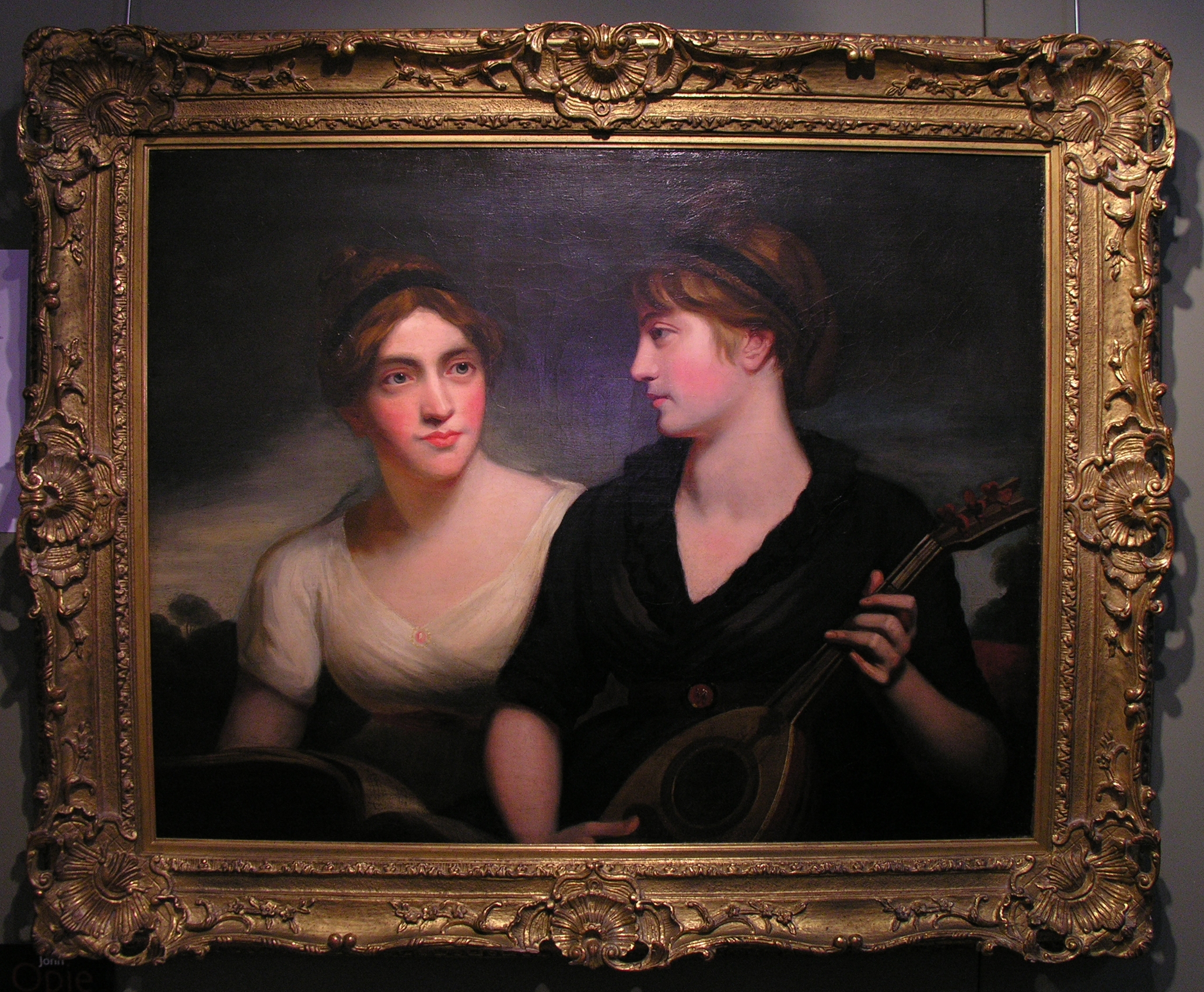
Double portrait of Amelia Opie, John Opie c. 1798, oil on canvas. Credit: Norfolk Museums Service
Just behind this eye-catching piece is the Double Portrait of Amelia Opie. Painted by her husband and artist John Opie, Amelia was a Norwich-born author, abolitionist, philanthropist and feminist. This unusual work shows Amelia in profile, wearing black and holding a mandolin, and with her full face, dressed in white and holding a music book. As a celebrated novelist, poet, singer and lyricist, John Opie seems “to pay tribute to the different sides of [Amelia’s] personality, and to emphasise her equal talents in both literature and music.”, says Vanke.
Make your way through The Northern Europe Gallery, past The Tower of Babel by Tobias Verhaecht and the double portrait of John Earle of Heydon and his wife by Peter Lely, and through to the Norwich Union Special Exhibitions Gallery. This is currently exhibiting David Shenton: Kindly Ease the Tension, the first major exhibition of this trailblazing British artist and cartoonist, exploring LGBTQ+ life in Britain.
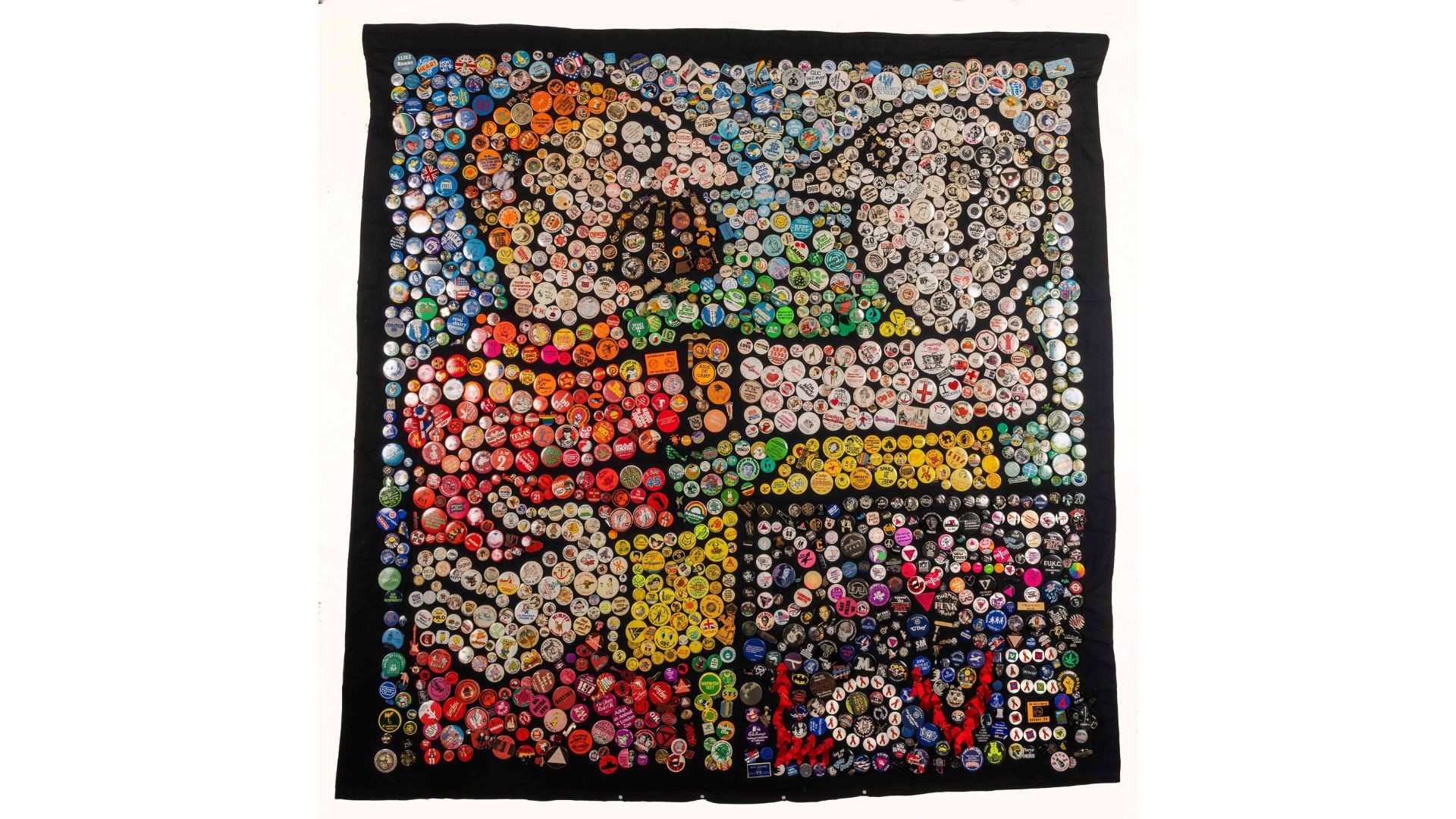
The Duvet of Love, David Shenton, 2016, badges pinned to textile. Credit: Norfolk Museums Service
One of the main pieces in this exhibition, and part of Norwich Castle’s permanent collection, is the Duvet of Love. A memorial to (but not a portrait of) two friends lost during the AIDs epidemic in the 1980s, this duvet is a striking piece, full of feeling and positivity. From far away, it shows two men embracing; close up, it’s a myriad of pin badges, seeming to narrate Shenton’s likes and experiences. See if you can spot old Norwich Theatre Royal pantos. Or one of our favourites, ‘You’re in EDP country’.
In David’s own words, “I’ve always collected things and button badges are very easy to collect… from Junior School…[to] Art School, hippie badges, pop groups, advertising and holiday camps.
I also came out at that time and collected all the political badges to do with Gay Rights and the Anti-Nazi League, and wore them with pride.
I decided to make this mosaic picture…it’s just a memorial of my time in Norwich, with the local badges, of my friends, with the political LGBT+ badges, and the tragedy of their deaths, with the red AIDS ribbons… and yet I tried to make the picture as loving and as happy as I could.”
And finally, journey into Norwich Castle’s eclectic decorative arts galleries. From The Twining Teapot Gallery, past humorous crockery, to The Arts of Living and Wider World Galleries, where you’ll find intricate embroidery- look out for the Norwich Shawl and delicate embroidered bench cover- and rare Norwich hallmarked silver.
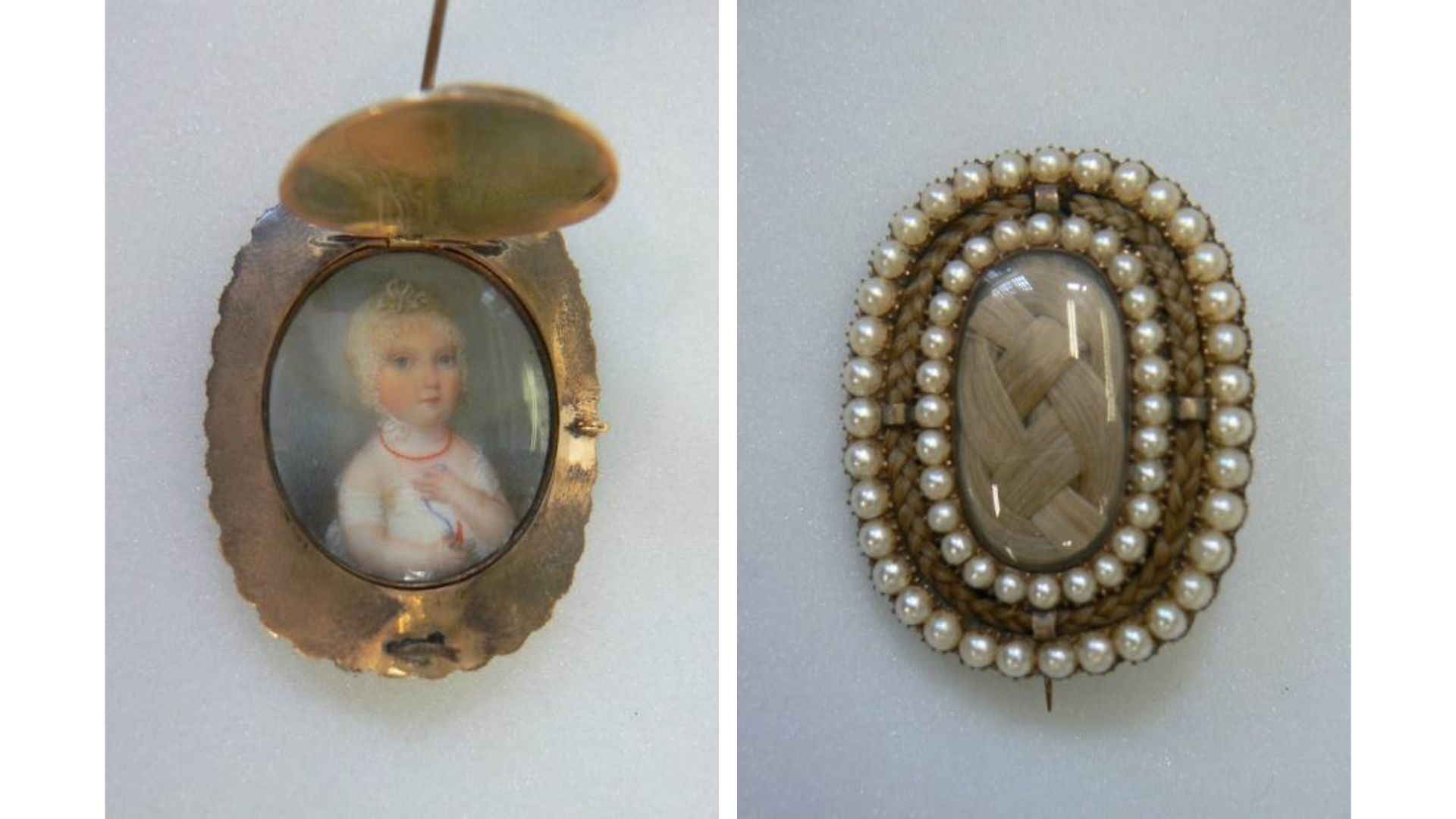
Oval mourning brooch, English, maker unknown, 1810. Credit: Norfolk Museums Service
One of the smaller, but no less interesting, pieces in The Arts of Living Gallery is an oval mourning brooch, 1810. It was common for mourning jewellery to hold locks of hair during this period. This brooch is “decorated with plaited locks of fair hair interspersed with rows of small pearls” and engraved with the words ‘SL Golightly ob 21 Nov 1810 aet 2 years and 3 mos’. The reverse of the brooch is even more touching, with the back opening to reveal a hand-painted miniature of a small child in a lace cap, wearing a coral necklace and holding a coral-handled rattle- coral signified protection from the evil eye. According to Vanke, “the portrait would not be visible when the brooch was being worn. It was therefore an entirely private, personal memento, almost certainly owned by the bereaved mother.”
From textiles to ceramics, fine art to silverware, this is just a snapshot of the amazing pieces awaiting your next visit to Norwich Castle’s permanent galleries. Even the most unassuming have a story to tell.
Norwich Castle Museum & Art Gallery is open daily from 10am – 5pm. Tickets start at £15.30 for adults and £15.03 for children. Pre-book online for the best prices or visit 1-hour before closing for a £2.50 twilight ticket (in-person only).
