
John Crome
John Crome
by Kate Wolstenholme
As part of our Twenty Stories series marking twenty years of VisitNorwich championing the city, we’re looking at John Crome, one of the founders of the famous Norwich School of Artists. See his works in Norwich Castle, home to the world’s largest collection of art from the Norwich School.
Twenty Stories. One City. The City of Stories.
From medieval rebels and mystics to pioneering reformers, artists, entrepreneurs and unsung heroes, these are the people who shaped Norwich over 1000 years- and whose legacy can still be discovered across the city today.
All our stories are told by twenty invited guest authors from across our city’s creative, tourism and cultural community.
Delve into the series and discover the places linked to these incredible people- from museums and tours to cultural landmarks and green spaces. We kindly invite you to- Step Into The Story.
Image: ‘Norwich River: Afternoon’ by John Crome, oil on canvas, circa 1812-19, © Norfolk Museums Service
Stories Published So Far:
Jack Valentine | Emma de Guader | Pablo Fanque | Rumsey Wells | Harriet Martineau | Julian of Norwich | Elizabeth Fry | Amelia Opie | Margaret Fountaine | Caroline Colman | George Skipper | Samuel Bignold | Anna Sewell | Margaret (Margie) Fahey McGrath | Margaret Paston | Edith Cavell
JOHN CROME
1768 – 1821
The illustrious British master who made Norfolk his muse.
Norfolk – fondly known for its flat, expansive landscapes, big, beautiful skies, endless coastlines, meandering waterways and unique Broads. Those who live here, love it; those who don’t, crave it; and those who visit, get it.
A landscape which many struggle to leave, a county which is held closely in people’s hearts, and an unforgettable experience so inspirational to many. Norfolk is home to creativity, to nature, to community, and passion.
It was here that drawing master and artist John Crome (1768–1821) found repeated inspiration for his majestic landscape paintings, from Norwich to Yarmouth and many locations in between. Then, in the 1820s, Norwich Mercury proposed that the Romantic era artist might ‘almost be the father of the art in Norwich’.
Regularly depicting overlooked scenes, Crome gravitated towards subtle content, run down fences, gravel pits, and other more ordinary details. More often painting simplistic scenes filled with wide open spaces. The result in his depictions of landscapes is the feeling of quiet, pause, room to breathe out – just the essence of Norfolk’s expansive skies. And whilst the scenes may have changed, that feeling of Norfolk has stood the test of time today.
Crome founded the Norwich Society of Artists with Robert Ladbrooke in 1803. The society was the first art society in Britain outside London and the annual exhibition, of which the first took place in August 1805, was the first exhibiting artists’ society to hold an annual exhibition along the lines of the Royal Academy. Members and associates included John Sell Cotman, James Stark, Joseph Stannard, George Vincent and more, including female artists Emily Stannard and Eloise Harriet Stannard. The society later became known internationally as the Norwich School of Painting and was monumental for putting Norwich on the map.
Fast forward more than 150 years, and it is Norwich which Sir Robert and Lady Lisa Sainsbury find to call home to their expansive, world-class collection of art and artefacts.
Settled into 350 acres of parkland on the campus of the University of East Anglia (UEA), the Sainsbury Centre nestles amongst 100 acres of Sculpture Park. Thanks to this remarkable gift of a new museum and world-class collection in 1978 and continued collection growth since, our county is home to works by the likes of Francis Bacon, Alberto Giacometti, Pablo Picasso, Elizabeth Frink, Yinka Shonibare, Leonora Carrington and so many more global artists and artefacts.
John Crome was one of the earliest English painters to represent identifiable species of trees in his works. The oldest tree at home in the UEA parkland was probably planted in the 17th century. The ancient oak was repeatedly cut to produce a crop of poles used for firewood, fencing and other uses and so now forms a unique shape telling of a life lived. Trees made this landscape their home long before the university and the Sainsbury Centre did, and some are depicted in Crome’s Entrance to Earlham Park, c.1807-8. It is veteran trees like the ancient oak which bridge time, connect artists such as John Crome, and observe colossal change.
Now, the ancient oak and its leafy peers, talk to the sculptures also finding home in the Sainsbury Centre Sculpture Park. From Henry Moore’s reclining figures to Lynn Chadwick’s Beasts, and Leiko Ikemura’s Usagi Kannon, this parkland is alive with voices.
Work by artists Ackroyd & Harvey, Beuys’ Acorns, a living sculpture of a circle of seven oak trees, is growing in the Sculpture Park. Designed to evolve and continuously benefit the local ecosystem for generations to come, Beuys’ Acorns creates a natural canopy for creative exploration and for people to meet and exchange ideas.
John Crome is hailed as not only one of the greatest artists of our county, but of Britain, gaining national acclaim through his life and after his death as a master of his art.
With Norfolk his muse, Crome made a groundbreaking impact on the history of art in his sixteen-year career.
With thanks to ‘A Passion for Landscape Rediscovering John Crome’, edited by Giorgia Bottinelli, a leading specialist on the works of John Crome. The world’s most significant collection of works by John Crome are held in the Norwich Castle Museum and Art Gallery, and a small selection of works on paper in the Sainsbury Centre collections.
Step Into The Story.
A city you don’t just read about – you experience.
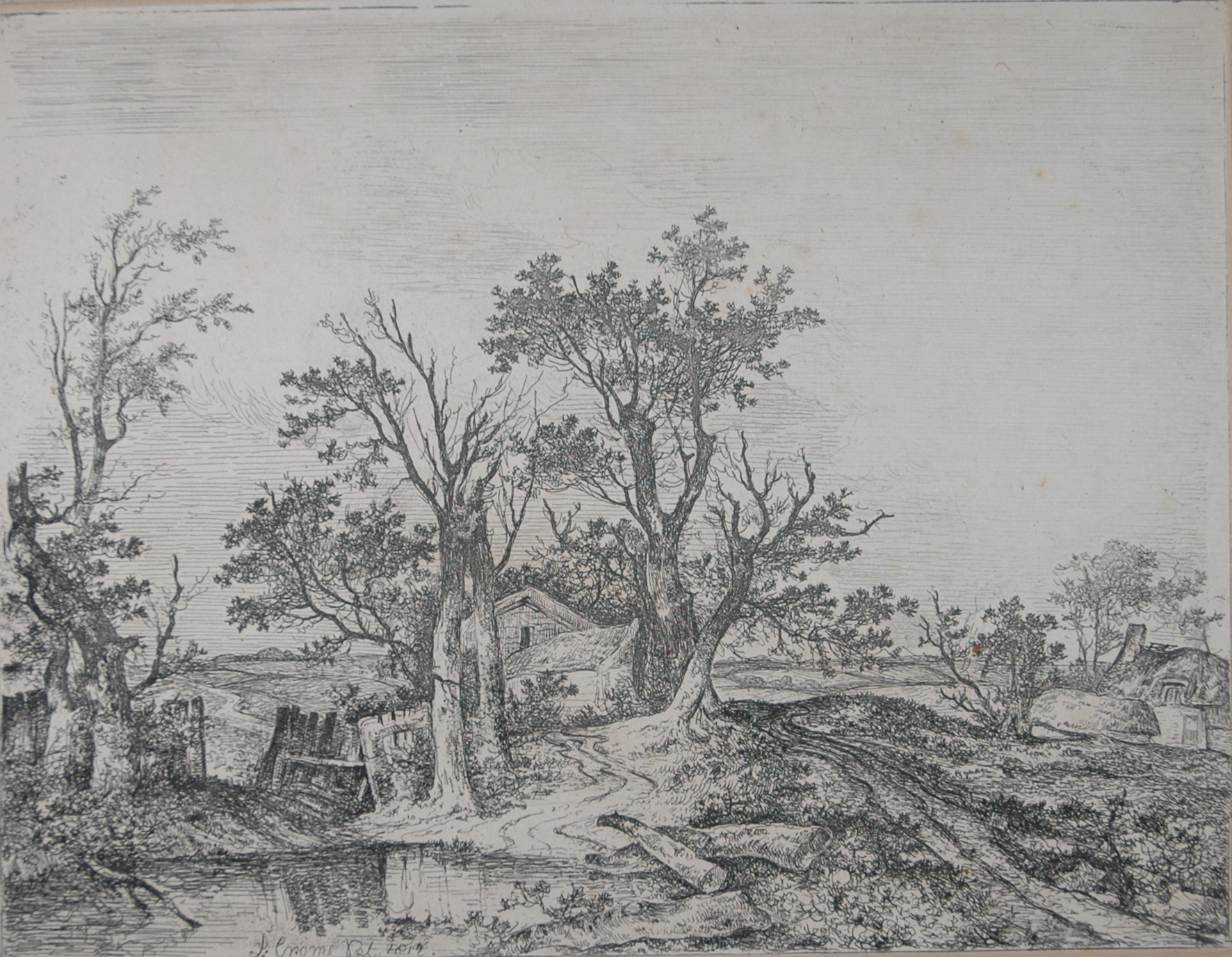
At Hackford by John Crome, ink on paper, from the Sainsbury Centre’s collections
With John Crome one of its founding members of the Norwich School of Painters, the first regional society of artists established in England, it’s no surprise that local landmark Norwich Castle Museum & Art Gallery (adults from £15.30, children from £13.05, twilight ticket 1 hour before close £2.50, book online for the best prices) holds the world’s largest collection of works by its artists.
Displayed in the Colman Art Galleries, you can admire eye-catching oils, landscapes and portraits by John Crome, alongside those of John Sell Cotman, Joseph Stannard, George Vincent and more notable names. Objects on show include ‘Norwich River: Afternoon‘ (circa 1812 – 19), ‘St Martin’s Gate, Norwich‘ (1812 to 1813) and ‘View of Norwich from Mousehold Gravel Pits‘ (circa 1798).
Author bio: Kate Wolstenholme is a PR and media professional at the Sainsbury Centre – a world-class art museum in Norwich. With a background in photography and journalism, Kate’s work spans storytelling, writing and media production. Kate was a journalist and photographer for the Eastern Daily Press and the Norwich Evening News, as well as working in the photographic archives. Alongside managing PR and media at the Sainsbury Centre, Kate writes the Art Talks Back column for the EDP, which explores life’s biggest questions through art.
