
A Guide to Norwich’s Blue Plaques
A Guide to Norwich’s Blue Plaques
by Katie Thompson
It’s safe to say that Norwich has plenty of history- from the obvious (we’re looking at you Norwich Castle) to the overlooked (when was the last time you looked down at the Lanes pavements and posts?).
And one of the best ways to find out a series of fun facts about our City of Stories is thanks to our blue plaques! Dotted around the city, they commemorate people, buildings, firsts and more. In fact, there are almost 300 heritage plaques here in Norwich! (Some say that’s more than almost every other city in the UK.)
So, where to start? Here’s our guide to some of the most interesting of Norwich’s blue plaques!
Image: Nick Warner
When you’re out and about in Norwich, take a moment to read our blue plaques. Credit: VisitNorwich
About Norwich’s Blue Plaques
Norwich is a city with myriad stories to tell. And our city’s blue plaques provide an insight into a snippet of this incredible and varied history.
A celebration of people, places and events- such as the first postcode or provincial library, you’ll encounter the familiar and unfamiliar, the everyday and the unusual. Perhaps, they’ll even invite you to find out more.
The world’s first commemorative blue plaques appeared in London in 1866, but aside from 100 now-disappeared plaques from the 1970s, it wasn’t until 2005 that Norwich saw its own blue plaque. A collaboration between Norwich City Council and Norwich HEART (Heritage Economic & Regeneration Trust), there are 39 between the Lanes, Cathedral Quarter and Castle & Marketplace.
Since then, other partnerships, such as the Eastern Daily Press and Norwich University of the Arts (then Norwich School of Art & Design), have added to these. In 2019, art project Rosie’s Plaques set about honouring Norwich’s women with a series of alternative plaques. Think Norman teenager Emma de Guader, lepidopterist Margaret Fountaine, feminist Amelia Opie, fencer Connie Adams, suffragettes and more.
With fun facts and interesting stories, blue plaques offer an insight into Norwich’s history. Credit: VisitNorwich
Castle & Marketplace
From Westlegate to Gaol Hill to Chapelfield North, Norwich’s Castle & Marketplace encompasses some of the most iconic features of our city centre, so, unsurprisingly, there’s plenty to find out!
On Castle Street (on the corner with London Street), you’ll find a plaque for the First Provincial Newspaper. First printed in 1701 as the Norwich Post, you’ll recognise it today as the Eastern Daily Press. It’s also claimed that the EDP is the largest circulation regional newspaper in England, while the Norwich Mercury (1714 – c.1998) claims the record for the longest continually printed local newspaper.
The Bell Hotel (plaque near Orford Hill entrance) is a familiar sight on Castle Meadow. But it was in the 18th and 19th centuries when this coaching inn became a centre of political and social activity, home to the likes of the Original Club- inspired by the change following the French Revolution. Elsewhere, the Bell even served the final meal of James Rush while he awaited trial for murder in Norwich Castle.
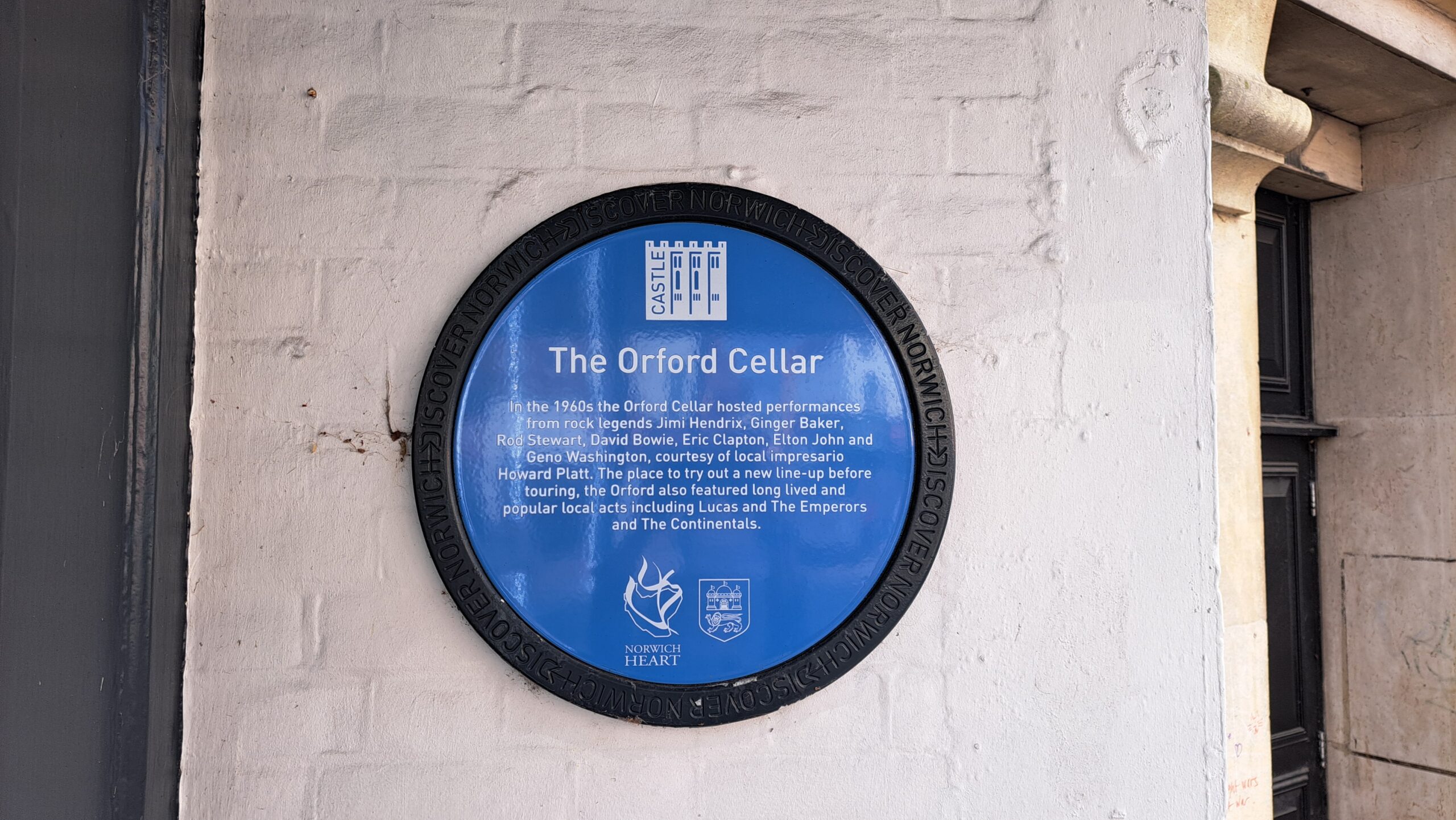
Speaking of Orford Hill, The Orford Cellar plaque celebrates this eponymous pub, which, in the 1960s, hosted an incredible line-up of acts alongside local bands, including luminaries Jimi Hendrix, Cream, David Bowie, Eric Clapton and Elton John!
When it comes to performers, check out the plaque to Pablo Fanque at All Saints Green. As Britian’s first circus proprietor, this Norwich-born equestrian performer was immortalised in The Beatles song Being for the Benefit of Mr Kite.
Meanwhile, a plaque on Golden Ball Street honours Romani DNA which was discovered during the construction of Castle Quarter in the early 1990s. Belonging to a skeleton from the 10th or 11th century, it’s the earliest evidence of Romani people in England.
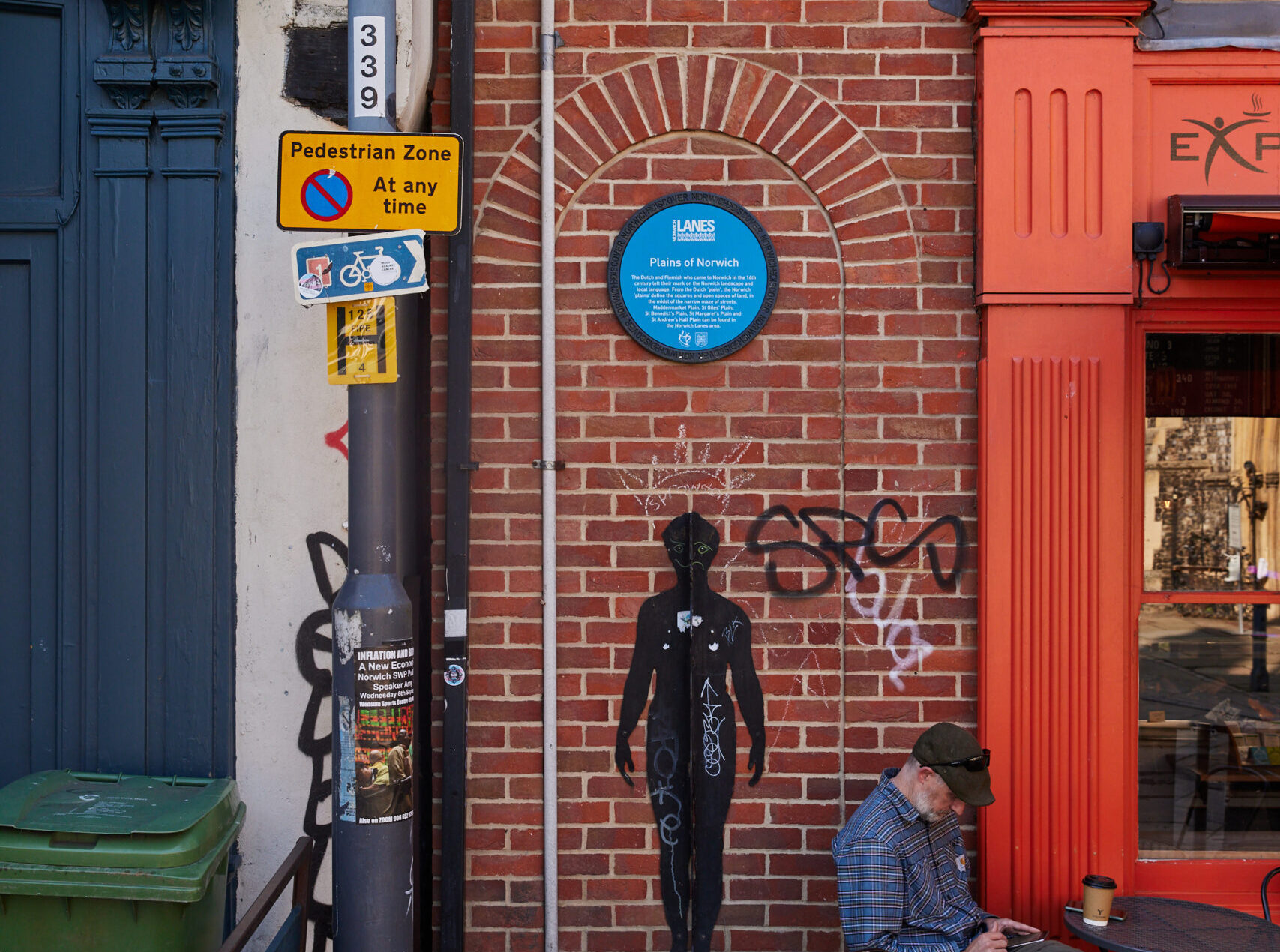
See the Plains of Norwich plaque on St George’s Street, opposite The Halls. Credit: Nick Warner
Cathedral Quarter
Whilst Norwich’s Cathedral Quarter dates back to Anglo-Saxon Norvic, we’re highlighting two interesting plaques found on Elm Hill– the city’s most complete medieval street.
Close to Wensum Street, Wright’s Court is one of only a handful of remaining residential courts in Norwich. As you can find out with tour guide Paul Dickson, the city’s overcrowded yards were commonplace for the working class up until the 1920s. On Elm Hill, this is where workers of nearby shoe factories and dye works lived. Today, it’s home to a charming cafe and curio shop.
At the top of Elm Hill, facing Wagon and Horses Lane, is a blue plaque for the Britons Arms. Look up! You’ll spy a thatched roof. If one of only a few left in Norwich. After the devastating fire of 1507, most of Elm Hill was rebuilt- characterised by the Tudor beams and tiled rooftops you see today. Not the Britons Arms. Luckily, it escaped and even houses a 13th century cellar and probably one of the oldest habitable attics in the country. The building is also a unique surviving example of a beguinage- where single women devoted themselves to a life of prayer and charitable work in late medieval times.
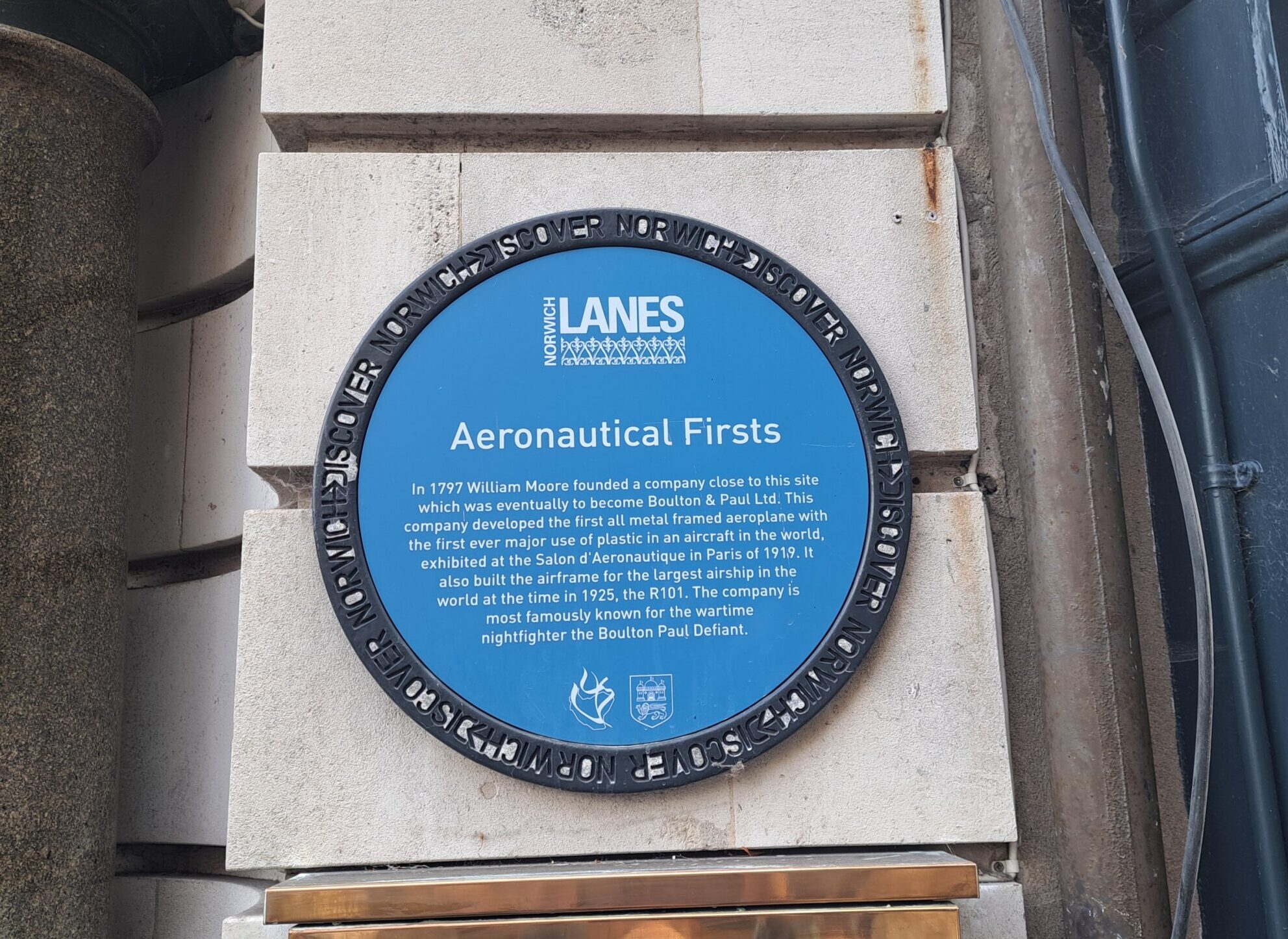
There are many a blue plaque in the Norwich Lanes, including this one dedicated to Aeronautical Firsts. Credit: VisitNorwich
The Lanes
With so many cobbled streets winding through the Lanes, a plaque, post or paving slab will often catch your eye.
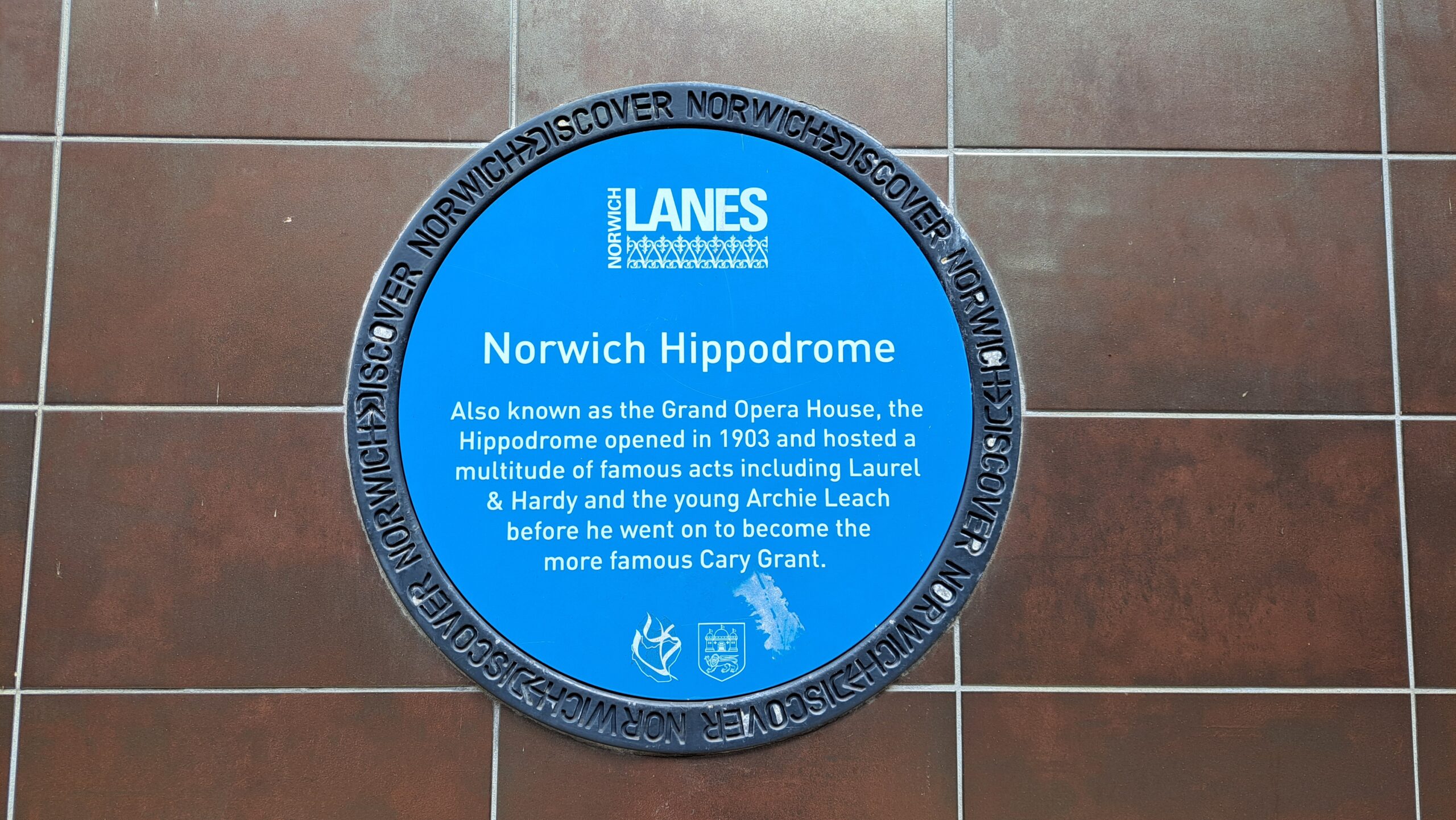
On St Giles Street once stood the Norwich Hippodrome (1903 – 1964). Immortalised by a plaque on the current car park, this popular theatre and entertainment hall welcomed many a performer, including Charlie Chaplin, Morecambe & Wise, Laurel & Hardy, and even a young Archie Leach- aka Cary Grant.
Only a few footsteps away, prison reformer Elizabeth Fry is remembered at the Quaker Meeting House on Upper Goat Lane. You might recognise this formidable woman from the £5 note- her prison reforms led to improvements worldwide and inspired none other than Florence Nightingale.
Along Pottergate, find two blue plaques of note. Firstly, The Strangers (next to Strangers Coffee). These Dutch and Walloon Protestants fled prosecution from Spanish Catholicism, invited to revitalise Norwich’s textile industry. And revitalise they did. The city became known for its weaving- you can still see so-called weavers’ windows throughout our medieval streets. And opposite St John Maddermarket church, one of these Strangers, Anthony de Solempre is remembered. Hailing from Antwerp, Solempre was the first known printer working outside of London, with works in French, English and Dutch. Her risked everything to print Dutch bibles and smuggle them back to his homeland.
Elsewhere in the Lanes, spot Ironmongers’ Arms on Lobster Lane. Named for Norwich institution Thorns opposite, this pub (until 2003) was thought to have been the only pub named so in England. Then on London Street, Aeronautical Firsts marks the legacy of Boulton & Paul, a company who made the first all-metal aeroplane and the airframe for the largest airship in the world at the time, the R101, in 1925.
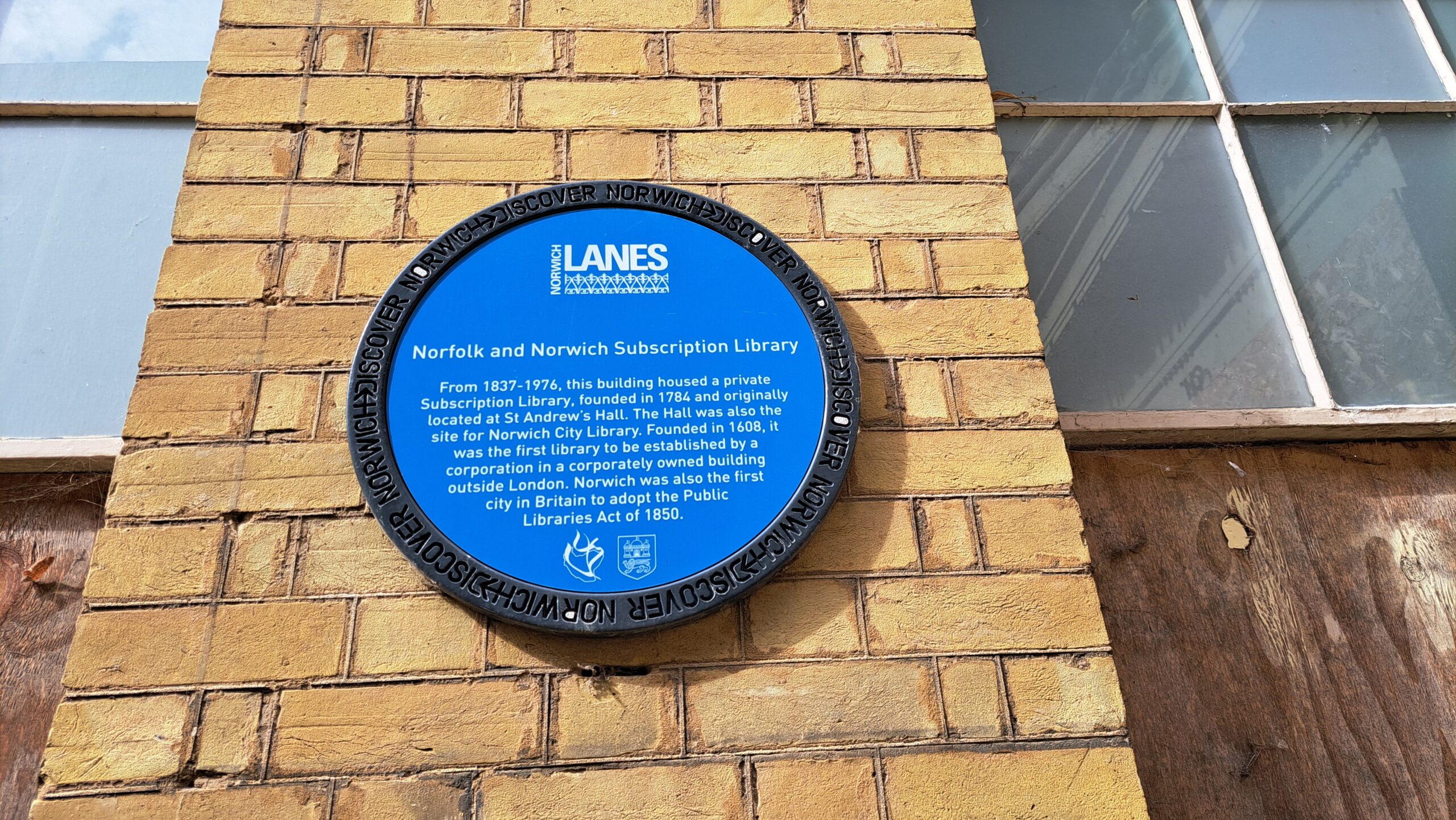
Most of our blue plaques are by HEART, but if you keep your eyes peeled, you’ll spot other collaborations highlighting special moments of Norwich’s history. Credit: VisitNorwich
Special Mentions
Chances are you’ve got your own favourite when it comes to Norwich’s blue plaques. Here are our special mentions not highlighted by HEART:
The Jolly Butchers (Ber Street)– home of landlady Antoinette Hannent- aka ‘Black Anna’, known for her jazz and blues singing and hospitality for American servicemen, the homeless and Norwich’s gay community.
Richard Hearne (Theatre Street)– Norwich-born actor, dancer, acrobat and children’s clown known as Mr Pastry, who made his debut at Norwich Theatre Royal when he was just six weeks old.
St Benedict’s Church Ruins (St Benedicts Street)– a Grade I listed round tower church (probably Norman) that was badly damaged in the 1942 Baedeker Raids in WWII. The tower is the only part still standing.
Lady Eleanor Talbot (riverside walk near Whitefriars Bridge)– an English noblewoman who lived and died in Norwich and was buried in the Carmelite Priory Church at Whitefriars. In 1483, the Bishops of Bath and Wells claimed that Lady Eleanor was legally married precontract to King Edward IV, leading to the invalidation of his marriage to Elizabeth Woodville, the illegitimacy of their children and the accession of Richard III (and, ultimately, the tragedy of the princes in the tower).
The Beatles (Prince of Wales)– on 17 May 1963, the Fab Four performed at the Grosvenor Rooms before queuing with fans for chips at Vaolri’s on Rose Lane.
Muhammad Ali (St Stephens Street)– as part of a promotional tour for Ovaltine in 1971, the World Heavyweight boxing champion visited a supermarket on St Stephens on 19 October.
-
Norwich HEART Blue Plaques
