
Your Itinerary to Medieval (Norman) Norwich
Your Itinerary to Medieval (Norman) Norwich
by Katie Thompson
Norwich is certainly a destination steeped in history. Once England’s second city, only after London, many of our iconic landmarks date back to the Norman Conquest and the prosperous centuries that followed.
From Norwich Castle to Norwich Cathedral, by way of churches, merchants’ houses, markets and more, you can still explore the mark medieval Norwich left today. And with 2027 the European Year of the Normans, it’s only right we shout about it that little bit more!
So, for history buffs and architecture aficionados, whether you’re a culture lover or enjoy exploring a new city, this is your 3-day, 2-night itinerary to medieval Norwich!
For more inspiration, plan your full 2027 Norman trip to Norwich HERE including
our dedicated European Year of the Normans deck!
Day One
Norwich Cathedral/ Riverside Walk/ Elm Hill
//Stay: Maids Head Hotel, from £191 per night, including breakfast.
//See & Do: Norwich Cathedral; riverside walk; Elm Hill.
//Eat & Drink: Refectory Cafe at Norwich Cathedral; Adam & Eve pub; WinePress at the Maids Head.
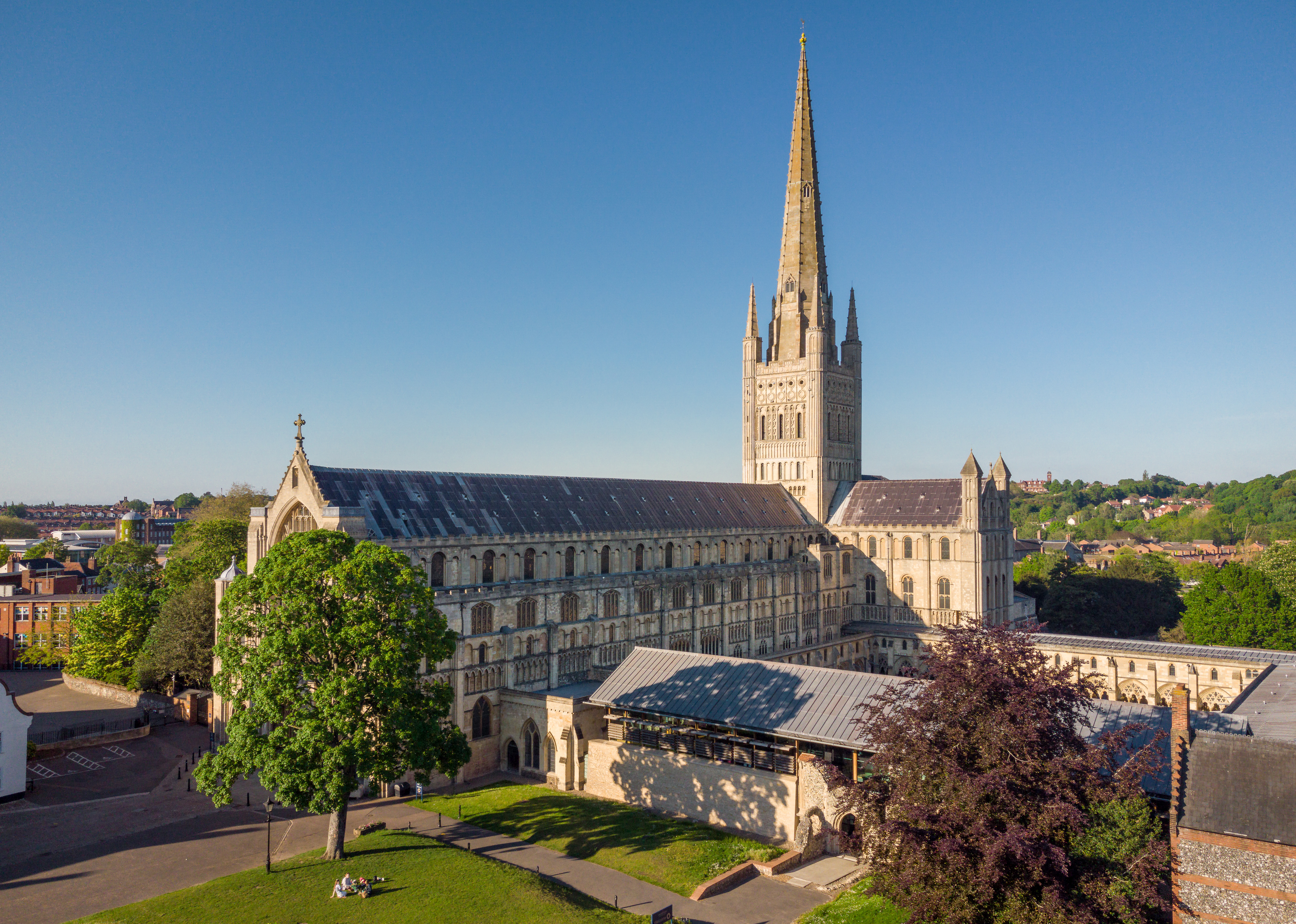
900-year-old Norwich Cathedral is always worth a visit! Credit: Bill Smith
Morning
Start off your medieval visit to Norwich by checking into your room at the Maids Head Hotel. Not only is this the oldest site of hospitality in the country (dating back to the 1090s!), but its stylish yet comfortable interiors are brimming with characterful features- think old oak beams and grand four-poster beds. Not to mention modern, walk-in showers, free-standing baths and warm, elegant soft furnishings! (If you can, we recommend a room overlooking our attractive Cathedral Quarter.)
The Maids Head stands proudly at the north end of Tombland- so-called in Anglo-Saxon times, its name means ’empty or open space’, as the heart of the city and marketplace. Today, it’s an attractive area boasting restaurant terraces, magnificent flint gates, and charmingly wonky medieval buildings!
From here, it’s just a short 2-minute walk to Norwich Cathedral (FREE)– its towering spire (second only to Salisbury in height and home to a resident peregrine falcon family) will guide you through the 15th-century Erpingham Gate and into quaint Cathedral Close (the largest in England).
Head into this impressive Romanesque building through the Hostry entrance. It’s built from Caen stone (as was Norwich Castle), transported along the River Wensum from Normandy just 30 years after William the Conqueror’s victory in 1066. Inside, you’ll be greeted with beautiful monastic cloisters- the largest in the country. It’s a magical setting, with vaults punctuated by strikingly detailed roof bosses and arches of sunlight washing the white stone in a golden glow. You won’t be surprised to hear the Cathedral’s cloisters are often described as Harry Potter–esque!
While you’re here, we recommend taking Norwich Cathedral’s free 1-hour tour to uncover stories and secrets about its history (look out for Budge the cat on your way around), then stop for a refuel in the Refectory Cafe (based on the site of the original Cathedral monks’ dining room!). You can’t go wrong with a flaky sausage roll or swirly cinnamon bun.
Lastly, don’t miss the cathedral’s exquisite library – the books are old, and the smell amazing! Bibliophiles will love this space.
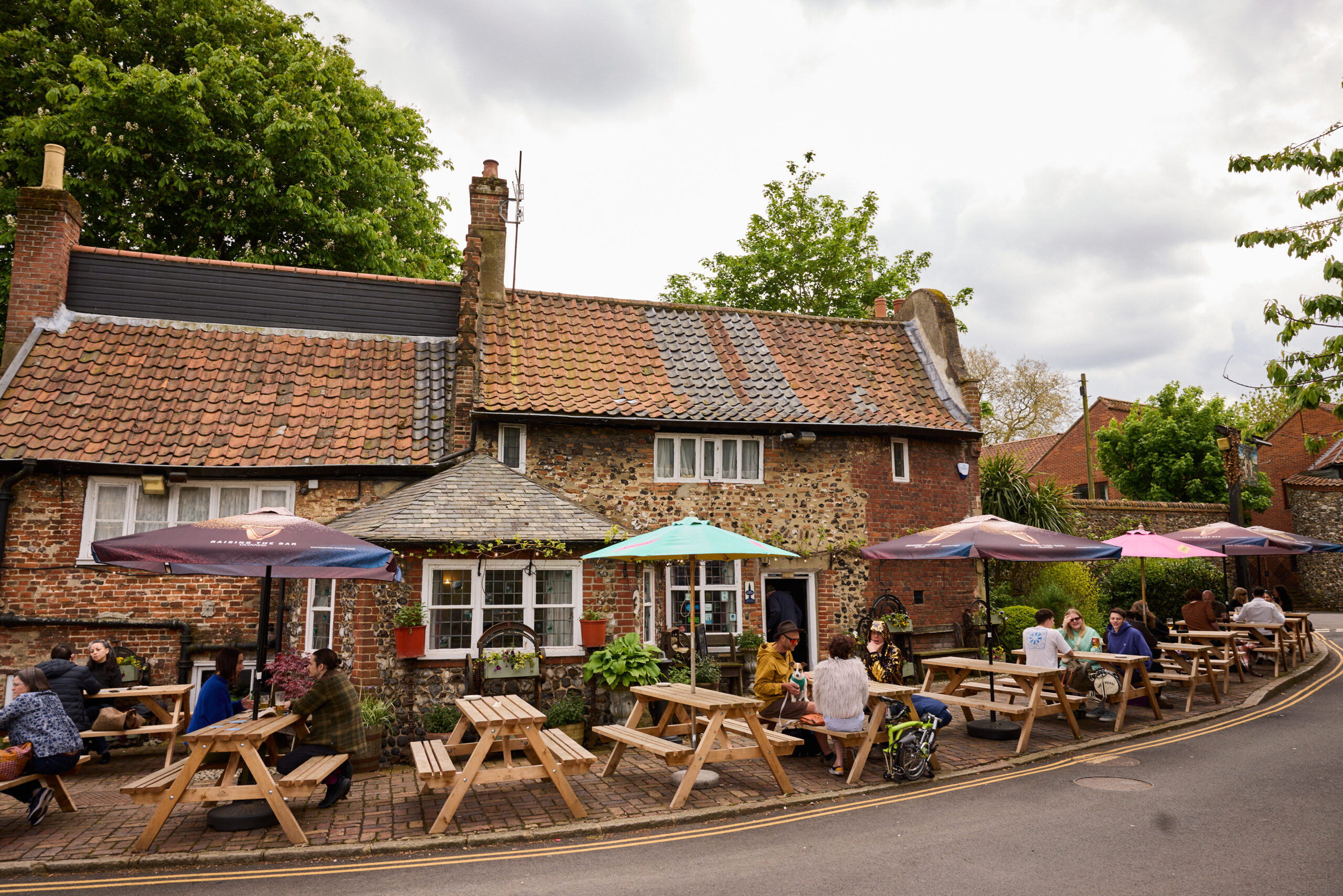
End your afternoon with a relaxed pint at Norwich’s oldest pub, the Adam and Eve
Afternoon
Amble at your leisure through Cathedral Close, past spring-green lawns (great for a picnic in the warmer months, by the way), the ancient fragrant Herb Garden (home to scents of lavender, thyme, rosemary and more) and quintessentially English cottages- think rose gardens, blossom trees et al- to our riverside walk.
From flinted Pull’s Ferry, meander north along this former medieval trade route, passing historic bridges and local landmarks, like Cow Tower, a former artillery tower used to defend the city that formed part of our once unassailable city walls. Brimming with nature, look out for fluttering weeping willows, gliding white swans, rippling reflections and wildflower-rich grasses- Norwich is home to the western fringes of the Broads National Park. And you might even be lucky enough to spot an otter!
When you reach ancient Fye Bridge on our colourful Quayside (it’s here witches were subjected to the dreaded ducking stool), soak in the views back along the river. Then, make your way south to Elm Hill (1-minute walk)- with a detour to Beer Hatch if you’ve a penchant for souvenirs shaped like Norfolk-brewed beers!
Elm Hill is like stepping straight into a fairytale. Our most complete medieval street is lined with higgeldy piggeldy Tudor buildings, cobbles and quiet courtyards. Wander past Paston House- former home to the prolific letter writing family– and up to the Britons Arms, one of only five thatched rooves left in the city. Under the dappled shade of Elm Hill’s plane tree, be entranced by the sense of tranquillity and let your eye wander to its many independents- from collectible bears to antiquarian books to pretty stationery.
End your afternoon at the Adam & Eve– the oldest pub in Norwich, passing by St Peter Hungate, home to a beautiful collection of medieval stained-glass windows, and along Palace Street. Sip on a crisp pint alfresco on their flower-filled terrace or hunker down in front of their oak bar, as you absorb stories of Saxon wells, medieval excavations and ghosts!
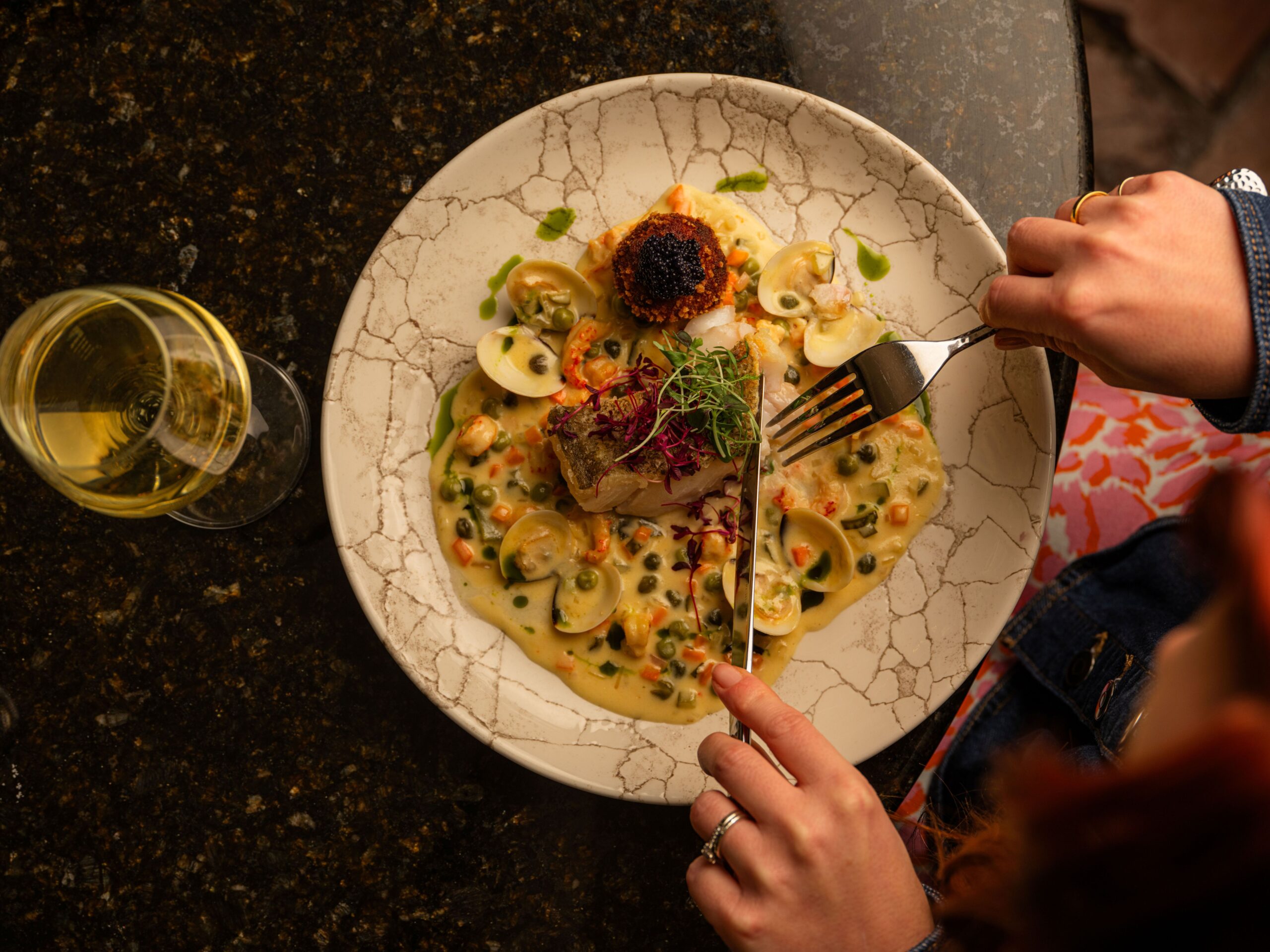
Dinner at the Maids Head, the oldest site of hospitality in the country? Count us in! Credit: VisitNorwich
Evening
Before the welcome of a sumptuous bed, treat yourself to dinner at the Maids Head’s 2 AA Rosette WinePress restaurant. Set in the hotel’s historic courtyard, expect seasonal menus championing Norfolk produce in flavourful dishes. From pan-seared tuna and confit courgette to chocolate mousse and a creamy local cheeseboard. We recommend booking the snug for a truly cosy and intimate dinner!
Day Two
Norwich Castle/ Norwich Market/ Traditional Pub
//See & Do: Norwich Castle; Norwich Guildhall; St Peter Mancroft church; Strangers’ Hall.
//Eat & Drink: Norwich Market; Sir Toby’s Beers; Red Lion Bishopgate.
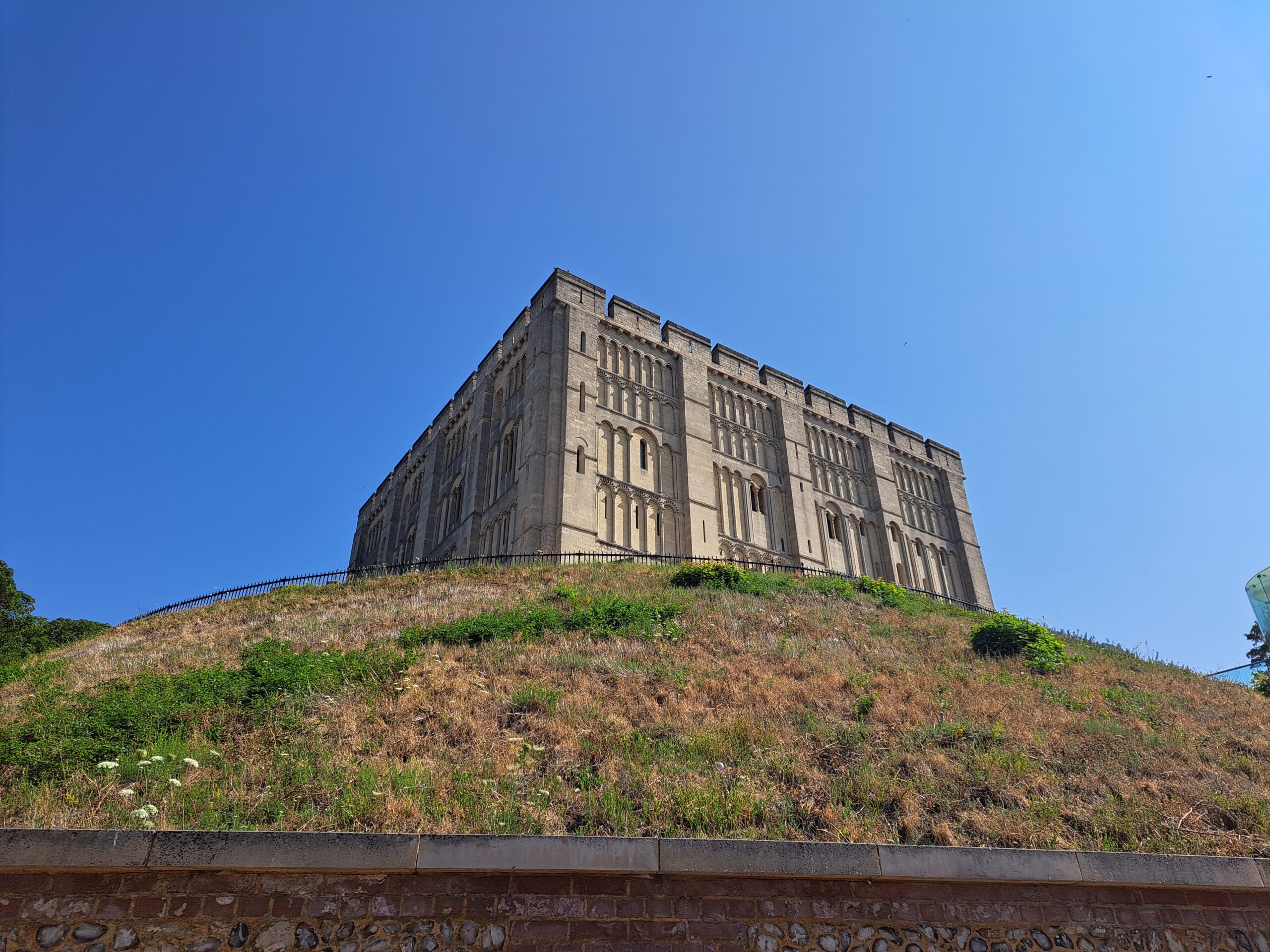
Norwich Castle is our city’s most recognisable Norman icon. Credit: VisitNorwich
Morning
Day two is all about our other Norman icon- Norwich Castle– and our oldest at that! After a delicious breakfast, make your way along Castle Meadow and up to the entrance of this 900-year-old landmark (open daily, 10am – 5pm, adults from £15.30, children from £13.05, pre-book online for the best prices. Twilight ticket 1 hour before close £2.50 open daily, 10am – 5pm).
Following a recent £27.5 million redevelopment, Norwich Castle is now the UK’s most accessible castle, with wheelchair-friendly lifts, sensory features and considered storytelling enticing you to every corner, past every crenellation, from basement to battlements (trust us, the panoramic views are worth it!).
Start off in the Keep, its walls constructed from Caen stone and faithfully reproduced with Bath stone during the 1800s, and immerse yourself in mesmerising wall-to-wall projections presenting the Castle’s origins. Founded by William the Conqueror in 1067, the Keep grew from a wooden fortress and was given to Ralf de Guader soon after. But after plotting rebellion, Ralf fled and it was his 16-year-old wife Emma who held siege against William’s army, eventually negotiating safe passage for her household to Brittany. Emma’s bravery is immortalised in Norwich Castle’s ‘sequel’ to the Bayeux Tapestry, faithfully constructed using the same centuries-old technique (it took 8 years to craft by talented volunteers). It hangs surrounded by authentically created furniture (yes, even the colours!) on the Keep’s reinstated floors. Take note of the attention to detail- we love the intricate ironwork as you enter The Great Hall.
Elsewhere, get up close with almost 1000 medieval objects in The Gallery of Medieval Life. Created in partnership with the British Museum (their first outside of London), see the exquisite workmanship of diverse pieces, such as an ivory casket, wooden altar piece and scientific instruments. Then wonder at the spotlighting of former stone arches and the well of every Norwich native’s childhood, all silhouetted with shimmering lights.
And don’t forget to explore the rest of the museum, where displays on Egyptians, Romans and Anglo-Saxons, fine and contemporary art, natural, industrial and regimental history (there are 18 galleries altogether) all tell the tale of our county’s rich history.

We love lunch at Norwich Market- locals have stopped here for produce for almost 1000 years! Credit: VisitNorwich
Afternoon
Where next but Norwich Market? When you’re feeling peckish, our 900-year-old marketplace offers a melting pot of worldwide flavours. Tangy, zesty, spicy, sweet. Aromas pull you in every direction. We suggest taking a look down every row before making your decision, but if you need some pointers, we love Churros for the People for albondigas, Papa Mombassa for slow-cooked chilli and The Bodega for impressively huge NYC-style sandwiches!
Take your lunch and sit in front of our Art Deco City Hall overlooking the market- changing places with those looking down from the battlements- or head to Sir Toby’s Beers, opposite our striking flint-knapped Guildhall, for a local craft beer.
Speaking of striking architecture, Norwich certainly isn’t short of any. And whilst you should always admire the modern glass-fronted Forum and elegant Georgian Assembly House, if it’s medieval you’re after, take a look at our churches. Fun fact: Norwich has more churches than any other city north of the Alps, and one of the most impressive is central St Peter Mancroft (1-minute walk). There’s been a church on this site since 1075. Inside, it boasts a hammerbeam arch-braced roof and the Mancroft tapestry, expertly woven by refugee Flemish weavers (also known as Strangers) in 1573 showing the resurrection of Christ.
On the theme of Strangers, your next stop is Strangers’ Hall (7-minute walk). Currently closed for roof repairs, this historic Tudor house offers a glimpse into the lives of the mayors and merchants who called it home, each room characterised by interiors and lifestyles of eras from the 14th to the 19th century. Even without going inside, you can appreciate the Hall’s medieval architecture, with hints of dark oak beams, decorative glass windows and flintwork visible.
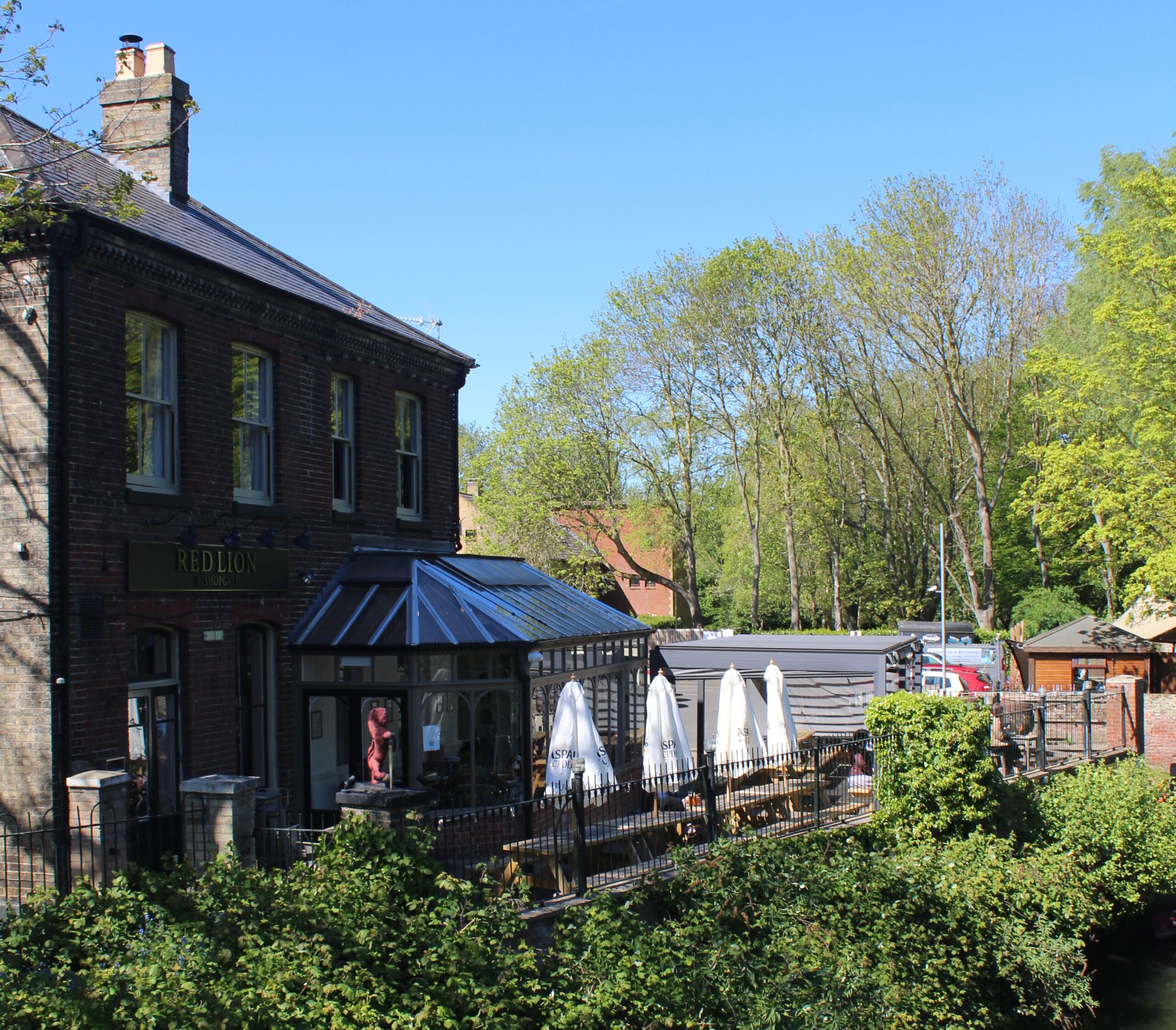
End your day with a moreish meal along the waterside at the Red Lion. Credit: VisitNorwich
Evening
After all that history, there’s nothing better than the promise of classic pub food. Book a table at the Red Lion Bishopgate (itself dating back to the 1500s), which sits on Norwich’s oldest bridge and had a front-row view of the aforementioned Robert Kett’s Rebellion in 1549. More on that later.
Watch the Wensum flow past, feast on moreish small plates (tempura tiger prawns, anyone?) or delicious dishes like crab linguine and warming sausage and mash, followed by a fruity rhubarb trifle or indulgent sticky toffee pudding.
Day Three
Mousehold Heath
//See & Do: Mousehold Heath; Kett’s Heights; The Julian Shrine.
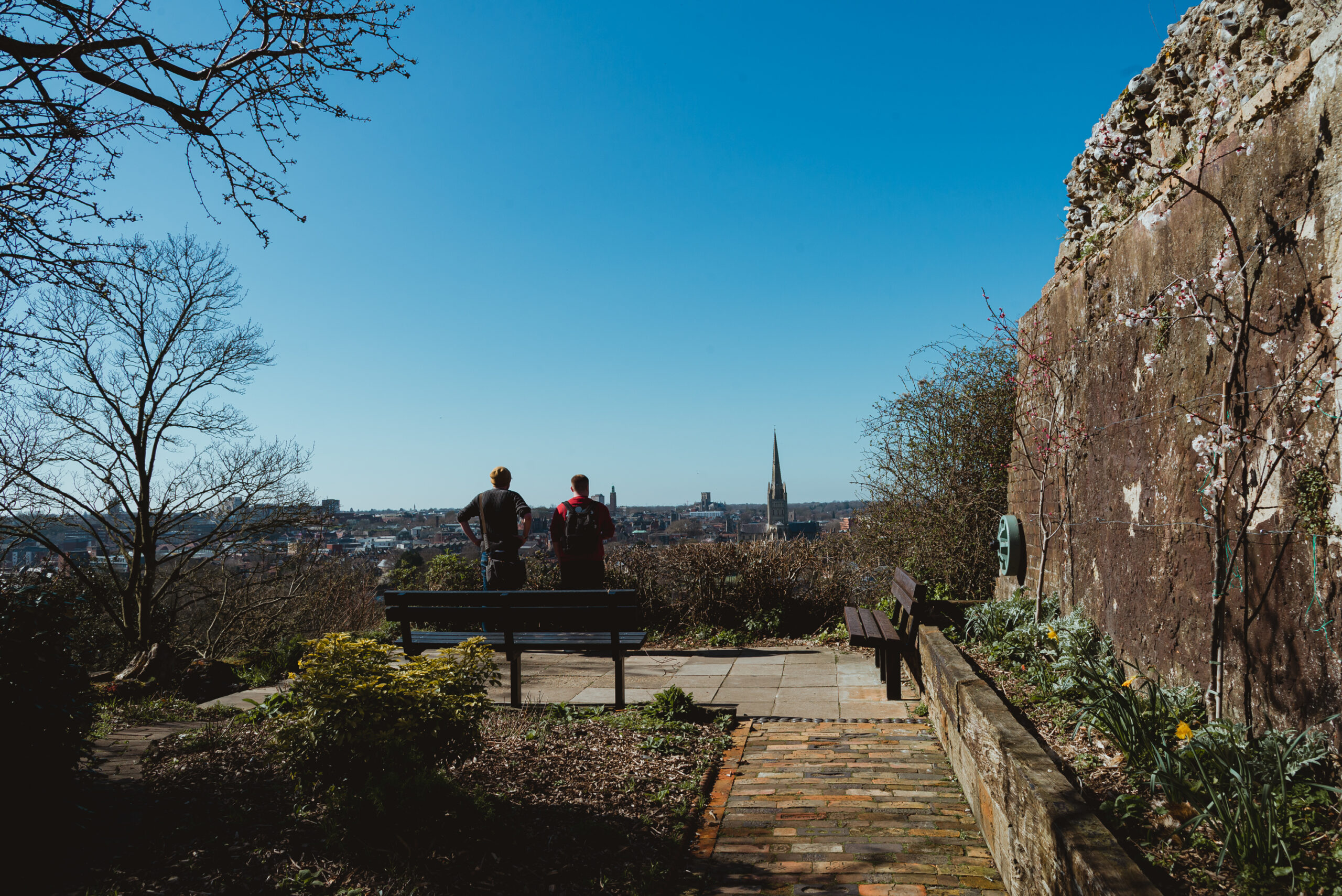
The views from Kett’s Heights are well worth the climb. Credit: VisitNorwich
On your final morning, take in the sights of the city with skyline views from Mousehold Heath. Just over 1 mile from your accommodation, this Green Flag woodland and heathland offers up unending vistas of Norwich, our two cathedrals, city hall and castle reaching up into Norfolk’s wide-open sky above.
Rich in flora and fauna (Mousehold is a favourite of local dog walkers), it’s where Robert Kett set up camp, gathering an army of over 16,000 in protest over land enclosures. The rebels were eventually overpowered and Kett was hanged from Norwich castle, but this strategic viewpoint- and its adjacent space Kett’s Heights, home to the remains of a medieval chapel- is still a popular spot for history buffs and leaves a lasting impact of Norwich’s incredible medieval past.
If you’ve more time on your hands or want to extend your visit, don’t forget to check out The Julian Shrine. Here you’ll find the site of medieval mystic Julian of Norwich’s anchoress cell- the very same place she wrote her Revelations of Divine Love and became the first woman published in English. Today, it’s a pilgrimage destination for lovers of her writing worldwide.

Contemplate the incredible life of medieval mystic Julian of Norwich at her eponymous Shrine
Or if you want to venture into Norfolk, our county is steeped in Norman and medieval history. Many churches aside (although it’s easy to spot Norman round towers rising up across the blanket of flat fields), take note of St Benet’s Abbey, put in charge of defending the East Anglian coast against the Norman invasion by King Harold II (he of Bayeux Tapestry fame). You can sail past these picturesque ruins on Fairhaven Woodland & Water Garden’s boat trips along the River Bure (March – October, adults from £7.50, children from £4.95). Or join Paul Dickson’s half-day guided walking tour, in which he’ll tell you the story of the abbey (£18pp, includes tea and cake).
Further west, there’s Castle Rising near King’s Lynn- “one of the best-preserved keeps in England…built in Norman times for the widow of Henry I and later residence of Queen Isabella, widow (and alleged murderess) of Edward II”, according to English Heritage. And at Castle Acre, you’ll have the choice between the motte and bailey castle ruins, bailey gate and the priory, all founded by the great Norman family, the Warennes, soon after the Battle of Hastings. Castle Acre “is a rare and complete survival of a Norman planned settlement… [the castle] remains one of the most impressive Norman earthworks in the country.”
