
Edith Cavell
Edith Cavell
by The Revd Dr Peter Doll
Renowned for her courage and selflessness as a nurse during World War I, Edith Cavell’s story captured hearts across the world, helping allied soldiers escape occupied territories and putting aside her prejudices to support the wounded on both sides.
Twenty Stories. One City. The City of Stories.
From medieval rebels and mystics to pioneering reformers, artists, entrepreneurs and unsung heroes, these are the people who shaped Norwich over 1000 years- and whose legacy can still be discovered across the city today.
All our stories are told by twenty invited guest authors from across our city’s creative, tourism and cultural community.
Delve into the series and discover the places linked to these incredible people- from museums and tours to cultural landmarks and green spaces. We kindly invite you to- Step Into The Story.
Image: Norwich Cathedral/ Bill Smith
Stories Published So Far:
Jack Valentine | Emma de Guader | Pablo Fanque | Rumsey Wells | John Crome | Harriet Martineau | Julian of Norwich | Amelia Opie | Margaret Fountaine | Caroline Colman | George Skipper | Samuel Bignold | Margaret (Margie) Fahey McGrath | Margaret Paston
EDITH CAVELL
1865 – 1915
Edith Cavell in her cell in St Gilles Prison speaking with the Revd Sterling Gahan, Anglican Chaplain in Brussels, 11 October 1915, the night before her execution. [Based on her own written words, or those recorded by others.]
I grew up in the countryside outside Norwich. My father was Vicar of Swardeston. I like to look back on the days when we were young and life was fresh and beautiful and the country so desirable and sweet. But I couldn’t stay there. God gave me a vocation to do something for other people. Most of them are so helpless, so hurt, and so unhappy. That something turned out to be nursing.
It was nursing that brought me here to Brussels. Dr Depage, the leading surgeon in Belgium, invited me to come to establish and lead its first professional training institute for nurses. The school was developing well, but then came the war. When Germany invaded Belgium, I was back in Norfolk on holiday. I returned immediately, because I knew that my nurses and I would be needed to care for the wounded, regardless of which side they were on. I tell my nurses that any wounded soldier must be treated, friend or foe. Each man is a father, husband or son. As nurses they must take no part in the quarrel – our work is for humanity. The profession of nursing knows no frontiers.
I can’t pretend it was easy looking after the Germans. We were divided between pity for these poor fellows, far from their country and their people, suffering the weariness and fatigue of an arduous campaign, and hate of a vindictive foe bringing ruin and desolation on hundreds of happy homes and to a prosperous and peaceful land.
At the same time, I had to do something more to help our soldiers. Many of them ended up caught behind enemy lines. They came to Brussels looking for help, and we had space in our cellars to hide them. The Germans told us that anyone caught assisting Allied soldiers would be executed, but what else could we do? As a Christian, it’s my responsibility to help anyone in need, regardless of any danger. Besides, some of them were my neighbours at home. One day, a young soldier came into my office asking for help, and he recognised the picture of Norwich Cathedral on my wall. I couldn’t help weeping and hugging him. Dear old Norfolk! I would do anything to help a Norfolk man.
Of course, the Germans were suspicious. They sent men to spy on us and to search our premises. One day, I heard their footsteps downstairs and only had time to throw my papers in the grate, pour alcohol over them and set them alight. All my records are gone now. Although we knew the danger, we could not stop. If we had not helped them and one of the men got shot, it would be our fault.
Finally, they came and arrested me and brought me to this prison – ten weeks now in solitary confinement. Actually, it has been a release and a relief after so many months of incessant activity, tension, and anxiety. I’ve been allowed to have my Bible, my Prayer Book, and Thomas à Kempis. I thank God for these ten weeks of quiet. It has been like a solemn fast from earthly distractions.
And now they are going to execute me tomorrow. I have seen death so often that it is not strange or fearful to me, but I am concerned for those I leave behind: my dear Mother in Norwich, and my nurses. Here is a letter I’ve written to my girls. I say, ‘When better days come our work will again grow and resume all its power for doing good. I told you in our evening conversations that devotion would bring you true happiness and that the thought that before God you have done your duty well and with a good heart will sustain you in the hard moments of life and in the face of death. I may have been strict, but I have loved you more than you can know.’ Please make sure they receive it. Tell my loved ones that my soul I believe is safe. My conscience is clear. I die for God and for my country.
My motivation has always been straightforward. Think of me simply as a nurse who tried to do her duty. I have no fear or shrinking. This time of rest has been a great mercy. But this I would say, standing as I do in the light of God and Eternity: I have realised that patriotism is not enough. I must have no hatred or bitterness towards anyone.
Step Into The Story.
A city you don’t just read about – you experience.
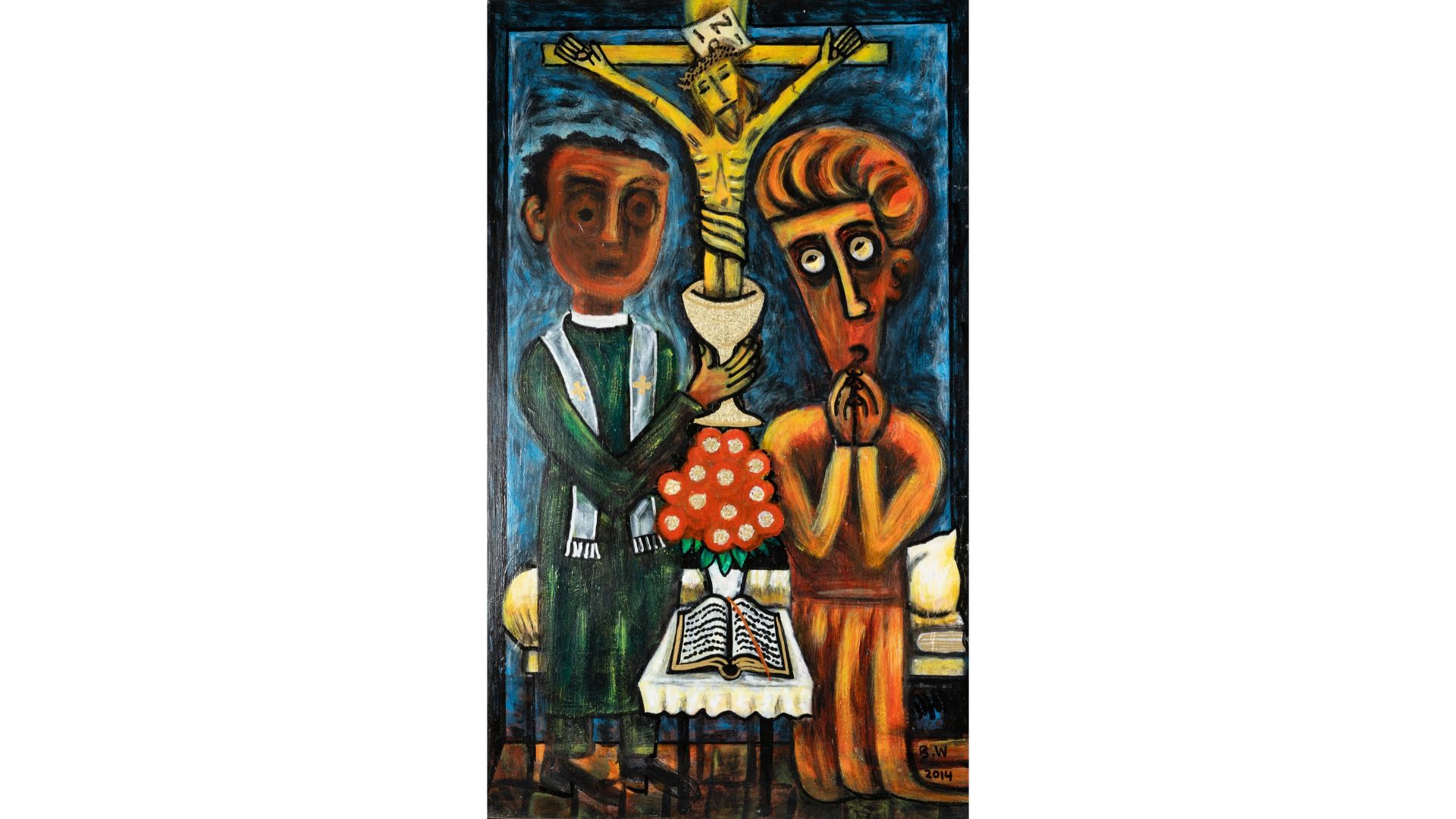
Part of a series of 14 paintings called The Passion of Edith Cavell: The Way of the Cross by Brian Whelan, you can see XI Communion in the Cathedral’s Ambulatory, near St Saviour’s Chapel. Credit: Bill Smith/ Norwich Cathedral
Edith Cavell’s legacy is most prominent in Norwich’s Cathedral Quarter.
At the east end of Norwich Cathedral, visit Edith’s grave- a calm and contemplative space, where, each May, there is a service to mark her re-burial and each October a service to mark her death. Her headstone features the emblem of her nursing school in Brussels and is inspired by the standard design of the Imperial War Graves Commission. On Tombland, outside Erpingham Gate, the Edith Cavell Memorial is another place to honour this remarkable and brave woman.
Find out more about Edith and join a Her Story Walk with Norwich Story Walks (£10, private tours available) to hear about her story and many other remarkable women with links to Norwich.
And to immerse yourself in her early life, take the seven-mile Edith Cavell Pilgrimage route on foot from her home village of Swardeston to Norwich Cathedral. It passes significant sites from Cavell’s life, including the vicarage where she grew up. There is also a circular cycling route of about 14 miles. Check out the trail map here or pick up a copy from Norwich Cathedral.
Author bio: An American by birth, Peter came to England as a student in 1986, married and stayed. Ordained in 1995, before coming to Norwich he served in the Diocese of Oxford as a curate, university chaplain, and team vicar.
As Canon Librarian at Norwich Cathedral, he oversees the work of the Department of Schools and Family Learning, the Library and Collections, adult education and exhibitions. In addition, he has led the development of the Walsingham Way pilgrimage route and the deepening of the Cathedral’s Benedictine identity. He is the author of various books and articles on theology, church history, and architecture and the liturgy.
